
The puppy grabs a sleeve. You offer a toy. A second later the puppy is back at the sleeve. You say “no”, the puppy gets even more wound up, and soon you are both taking part in a game neither of you planned.
Biting is one of the most common reasons why the first weeks feel harder than the family expected. And one of the most common situations in which normal puppy behaviour is mistaken for a character problem.
For a puppy the mouth is both hands and a research tool
A puppy uses his mouth to explore texture, start a game, carry things, ease the discomfort of teething and try to regulate his own arousal. We cannot remove the need to chew. We can show what is safe to chew, and stop him rehearsing what we do not want.
One thought is worth repeating: if a puppy chews his bed, stopping him is not enough — you have to offer something he is allowed to chew. But we do not repeat the taps under the chin, scruff grabs or “biting the hand” suggested in older texts. Physical intimidation can stop behaviour briefly, but it does not show a safe alternative and can undermine a sensitive dog’s trust in human hands.
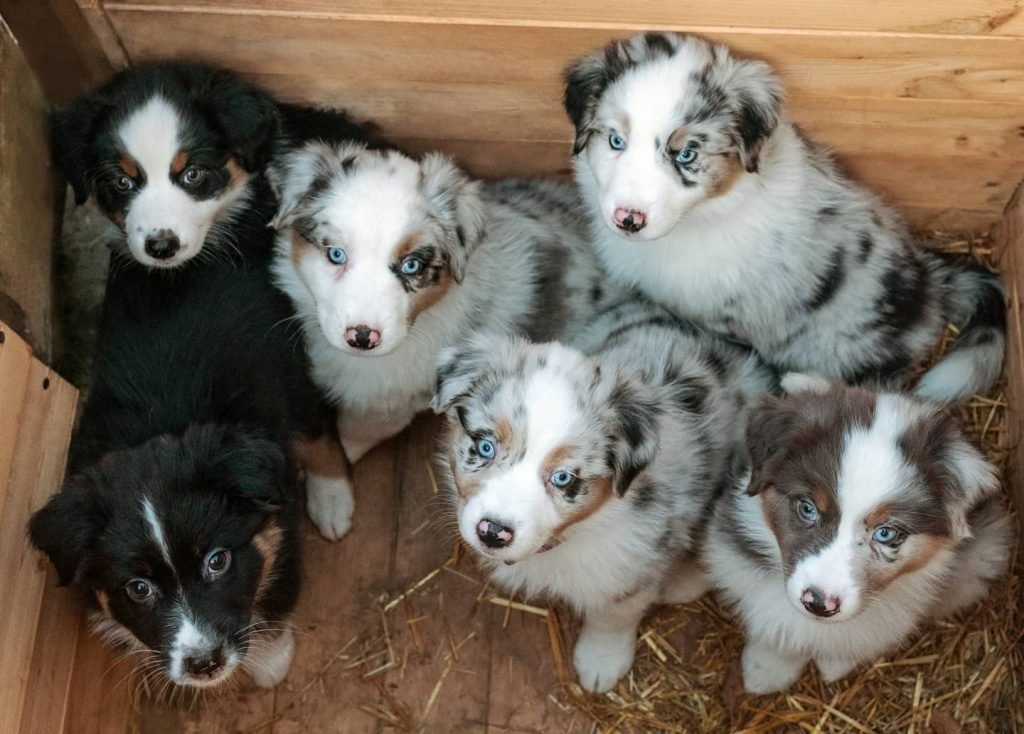
First work out what kind of biting you are seeing
The same touch of teeth can have entirely different causes, so a single universal “no” often does not work. In play a puppy bites with a loose body, jumping about and taking pauses. Teething chewing is aimed at objects rather than a moving hand. Overtired biting builds in the evening, and no toy will stop it. Fast movement triggers the herding instinct, so the puppy usually aims at heels or trouser legs. A bite from fear or pain happens suddenly, after warning signals, and needs separate attention.
What to do when teeth touch a person
First stop the game and stay calm yourself. Do not snatch your hands away suddenly, so that they do not turn into prey. Break the focus briefly and offer a suitable toy. If the puppy redirects onto the toy, carry on playing with that toy.
If he goes straight back to hands or clothes, either step behind the gate for a moment or calmly take the puppy to a safe area with a chew. This is not a “punishment minute” for reflecting on his conduct. The biting game simply ends, and the puppy gets the chance to settle.
Sometimes the best way to stop the biting is to let the puppy sleep. If he has been awake a long time, has met a lot of new things and no longer accepts a toy, there is no need to look for an ever stronger correction.
The environment has to work with you
Keep a toy where the biting most often happens, not at the other end of the house. Use a gate while children are playing. Clip on a light lead before guests come in. Keep shoes and laundry out of reach.
If a puppy steals a sock ten times a day and you chase him ten times a day, he has twenty reasons to keep doing it: the object is interesting, and you start a game.
Teach swaps while the object is still harmless. Offer a better reward, and when the puppy lets the object go, mark the right behaviour and sometimes give the safe object back. “Drop it” must not mean that a person always takes away everything valuable.
Children cannot be a puppy’s trainers and targets at the same time
A running, squealing child can be an almost irresistible movement trigger for an Australian Shepherd puppy. You cannot expect a small child to “show who is in charge” or physically stop the dog themselves.
The adult manages the situation. The puppy watches the children move from a distance at which he can still take food and keep his feet on the ground. The children learn to stop, not to snatch their hands away, not to disturb a sleeping or eating dog, and to call an adult. When play becomes too boisterous, the two sides are separated before any conflict.
A safe bond does not come from a child winning a battle with a puppy. It comes from an adult not letting that battle start.
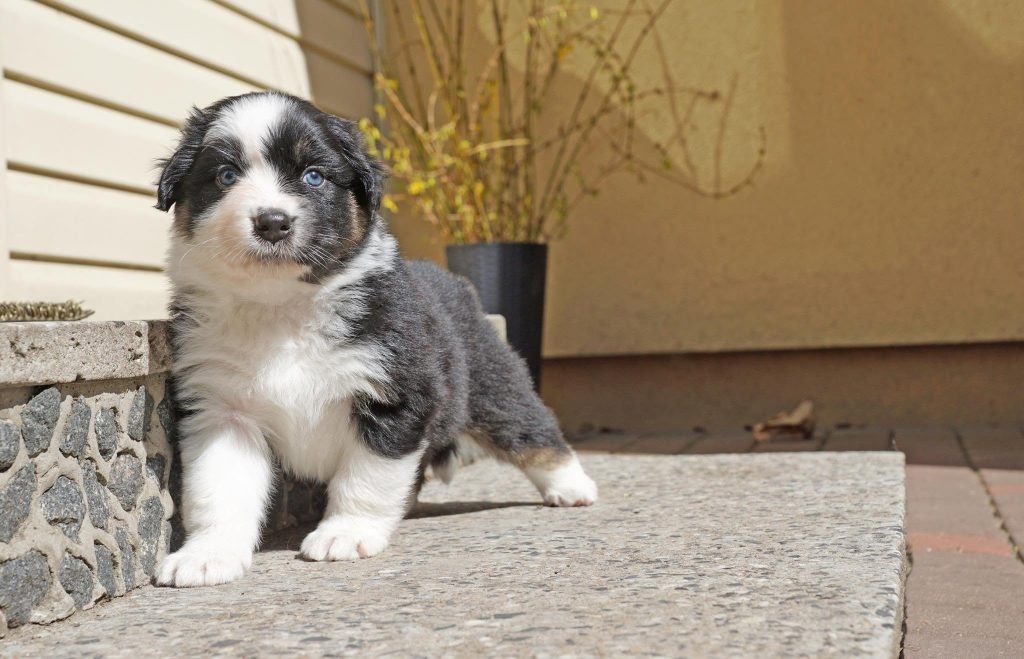
And then comes adolescence
Just when everything seems to have worked, a young dog may start pulling again, responding more slowly, taking a stronger interest in his surroundings and getting excited faster. This is often mistaken for deliberate “boundary testing”.
In reality an adolescent’s motivation changes, the world becomes more important, and self-control does not yet match an adult dog’s. A previously learned cue has not disappeared, but in a harder environment its value may be too low.
Go back a few steps. Use a longer lead instead of a risky off-lead moment. Increase the distance to the trigger. Reward more often again. Protect his sleep, and do not try to solve every difficulty with even more physical exercise.
You will not fix behaviour once and for all
Raising a dog is a way of life, not a temporary intensive project. This idea describes adolescence particularly well.
The family does not need to live like a barracks for a month and perform a hundred cues a day. What is needed is to hold the same meaningful boundaries: we do not let the puppy bite people, we behave safely at doors, we rest after activity, we protect the dog from situations that are too hard, and we reward good choices.
If behaviour has changed sharply and suddenly, if aggression, unusual sensitivity to touch or sleep disturbances have appeared, or the dog no longer recovers from everyday situations, first find out whether there is a health problem, and consult a qualified specialist who works with positive reinforcement methods.
A puppy does not grow up through one perfect training session. He grows up through thousands of small everyday situations in which you help him choose, stop, rest and try again.
Read next: A dog talks all the time. Do we know how to listen?