
There is one thing we will not argue about at all with future Australian Shepherd owners.
Aussies are beautiful.
Very much so.
Blue merle, red merle, copper markings, eyes of different colours — this breed has everything needed for someone to browse calmly on their phone and suddenly, twenty minutes later, have saved 46 puppy photographs.
So when someone tells us “what I would most like is a blue merle female with blue eyes”, our reaction is not: “How dare you choose a dog with your eyes.”
We have eyes too.
In our survey only 44 of 117 future owners had no colour preference at all. So most people come to the breed already holding a certain picture in their head.
And there is nothing wrong with that.
The problem begins only when a photograph starts making decisions for a person.
At three in the morning a blue merle coat does not help
A puppy’s colour will matter the first time you see him, when you photograph him and probably hundreds more times over his life as you admire your dog. But at three in the morning, when an adolescent decides that a noise in the stairwell is a matter of national importance, the blue merle pattern no longer helps.
In everyday life temperament matters far more.
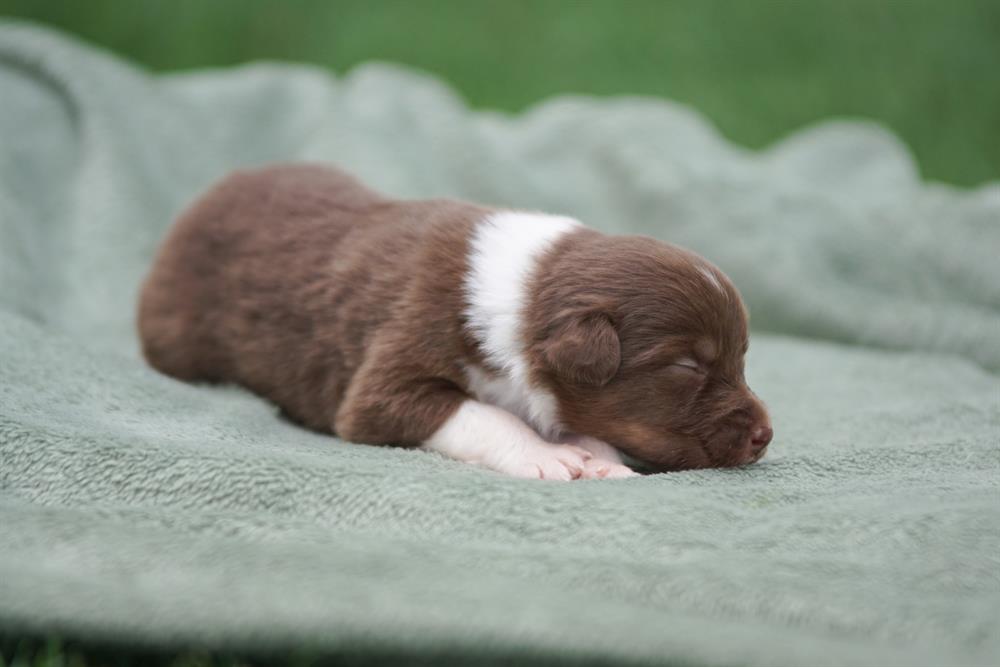
One puppy throws himself into everything you offer. Another looks first before going. One carries on with life within seconds of an unexpected event, another needs more time. One constantly seeks out people, another likes solving problems by himself.
Neither of them is better or worse for it.
Yet one of them may be a far better fit for you.
An active, bold puppy who charges into everything first usually wins the popularity contest at a first meeting. He climbs onto laps, tugs at shoelaces and looks like an extraordinarily fun future partner.
And he really can be one.
But for a family looking for a calm city companion and raising their first dog, that same small charismatic imp can sometimes be the most difficult choice in the litter.
Meanwhile the puppy who did not rush over to visitors in the first minute and watched the situation before approaching can look like “not the one”. Yet a few years later he may be exactly the dog whose owners say: “We could not have had a better one.”
Sex is not a summary of character
Much the same happens with sex.
People like short rules: males are like this, females are like that. Males are more affectionate. Females are easier. Males are dimmer. Females are more independent.
The trouble is that real dogs have often not read these internet rules.
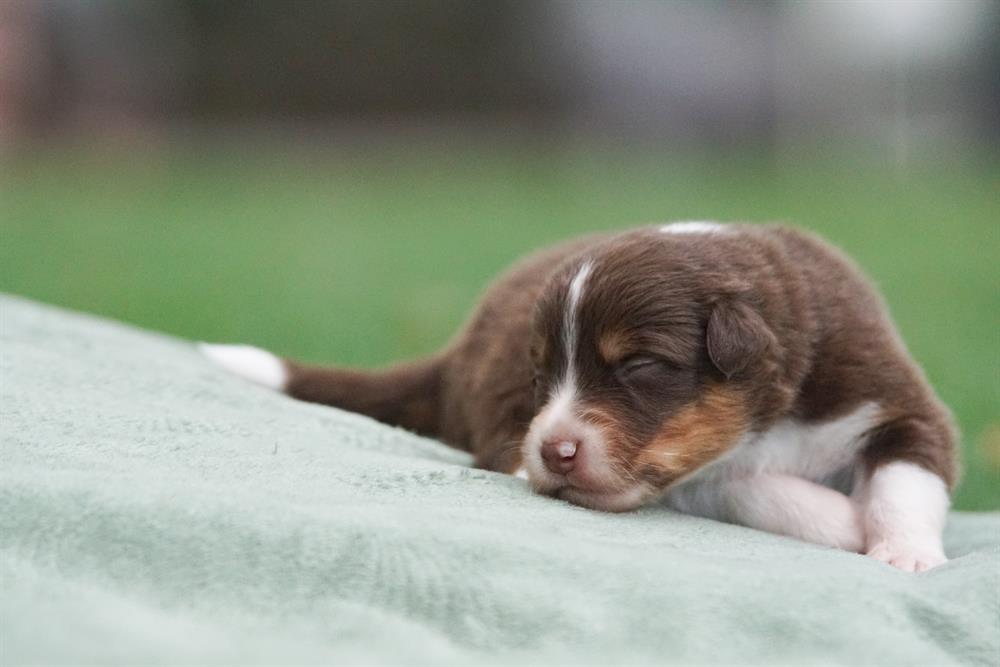
Sex is of course one of a dog’s characteristics and can have practical significance. But it is not a reliable summary of character.
In our survey 41 people preferred a male, 33 a female, 23 said it did not matter to them, and 20 wrote that they simply did not know enough to choose.
And to be honest, we rather like that last answer.
“I don’t know” leaves room to get to know individual dogs.
Why is a breeder needed here at all?
Because the future family usually sees the litter for a few hours. The breeder sees it for weeks.
And that is very different information.
You may arrive just as the puppy you have chosen has woken up and looks the calmest of them all. Or just after another one has had a wild play session and now seems “less active”.
The breeder sees them in the morning and the evening, tired, excited, in new surroundings, in conflict, playing, seeking help and solving problems.
Does that let us predict exactly what the dog will be like in five years? No.
A puppy’s temperament is not a crystal ball. It will be shaped by genetics, the future environment, socialisation, health, training and countless experiences that do not yet exist.
But watching over several weeks is still a great deal more information than that single moment when a puppy settled sweetly in your arms.
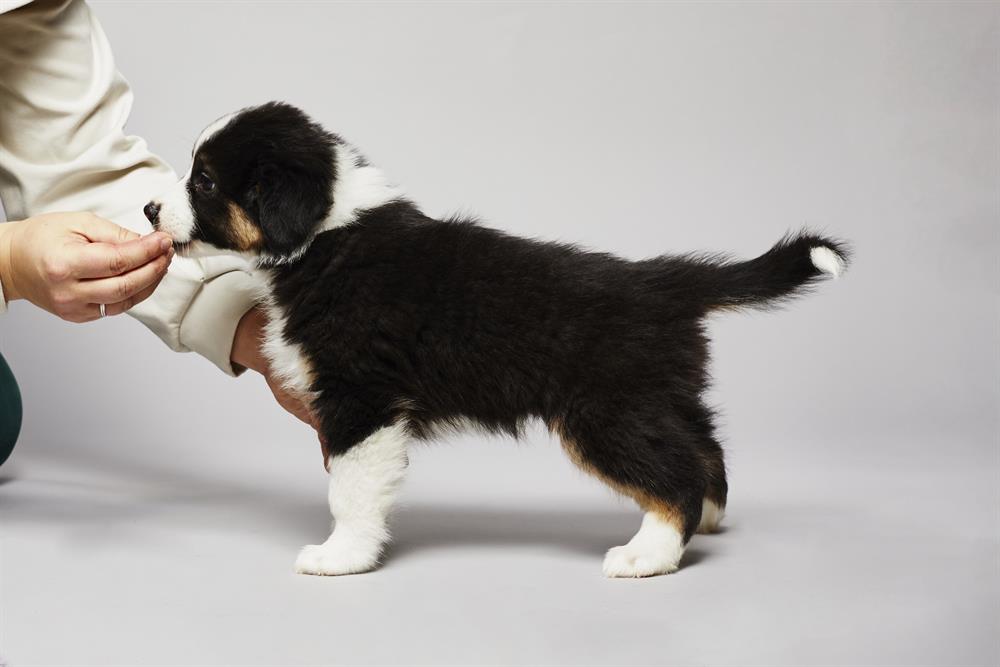
That is why we see choosing puppies as shared work.
You can tell us you dream of a red tri male. We hear that. But we also want to know how you live, how much experience you have, what you expect from a dog, how much chaos or calm there is in your days, what activities you are planning and what would be too much for you.
And only then do we look at the puppies.
Sometimes it all lines up beautifully and your favourite colour happens to be on the dog who suits you best. An excellent scenario.
Sometimes they do not match.
And then our job is not to take the choice away. Our job is to say what we see and explain why.
Because a few years later owners almost never tell us how beautifully the white markings on their dog are arranged.
They tell us about the funny thing he does every morning. How he travels with them. How he understands the family’s rituals. How he has changed since puppyhood. How a single glance already carries a whole conversation.
So looks really can be one part of the decision.
We simply very much hope it will not be the most important one.
Because in the end the most beautiful dog usually turns out not to be the one whose photograph you liked best at first. It is the one you still enjoy living with many years later.
Invitation: Do name the colour or sex you like in the questionnaire. We will hear it - and we will look deeper at the same time, so that the choice suits not only a photograph but your life.