
The puppy falls asleep at your feet, but the moment he is moved into the crate he starts whining. During the day he follows you from room to room. When a door closes, even if you have only gone to the bathroom, the world ends.
This does not mean the puppy is “running the family”. Until he arrived he had almost never been alone. The ability to separate safely is not a factory setting — it has to be learned.
Night and solitude are not the same exercise
At night the puppy has to stay in a quiet place, notice when he needs to relieve himself, and then fall asleep again. During the day he learns that a person can leave and come back.
If we combine both exercises at once — a new crate, a different room, darkness and eight hours without a person — we can no longer tell which part was too hard.
In the first nights keep the crate or bed beside your own. You can lower a hand to the bars, speak quietly, stay nearby until the puppy settles. Later, once nights become predictable, move the place gradually to where the dog will sleep permanently.
Closeness in the first week does not create a lifetime of dependence. Uncontrolled panic does not create independence either.
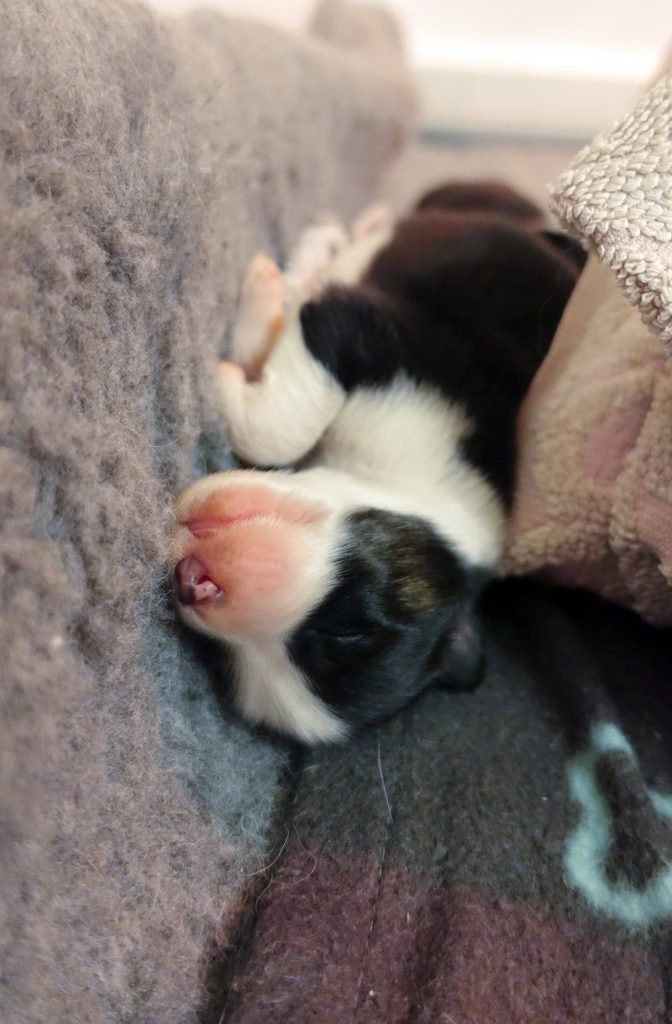
What a night-time trip outside looks like
Before bed — the last toilet break. When the puppy stirs at night, listen first. If he has only changed position, let him fall asleep again. If he is restless, sniffing the corners of the crate, circling, or the whining is building, carry him out calmly to the same spot.
Little light, few words, no play. Done — a quiet word of praise — back to sleep.
If the puppy did nothing outside, go back to the crate and watch. That way night-time whining does not become a ticket to a party, while the physical need is not ignored.
Teaching a dog to stay alone begins while you are still at home
A puppy who spends every second touching a person cannot suddenly understand two hours alone. Start with small, almost comically easy separations.
Give him a chew inside the pen and sit down on the other side of the gate. Stand up, take a couple of steps, come back. Close the door briefly. Go and fetch a cup. Sometimes come back after two seconds, sometimes after five.
Come back while the puppy can still stay calm. If you wait for the first bark every time, you teach him that barking is the signal after which a person returns. More importantly, you keep taking the puppy to the point where learning is hard for him.
A camera tells you more than the greeting at the door
A dog can greet you joyfully even after a peaceful sleep. He can be silent the whole time yet stand frozen by the door. So it is worth filming the first real departures.
Look for more than barking. A calm puppy investigates his chew, lies down, changes position, turns away from the door and may fall asleep. Anxiety shows as constant pacing, yawning that is not about sleep, drooling, heavy panting that is not about heat, watching the door, refusing food or trying to escape.
If you see anxiety, the next attempt should be shorter — not longer “so that he gets used to it”.
The leaving ritual must not become an alarm siren
Dogs are excellent at linking events. Keys, perfume, a work bag and a coat being zipped up can start creating tension long before the door closes.
So sometimes go through these motions without leaving at all. Pick up your keys and sit down. Put your shoes on and go to the kitchen. Open and close the front door. That way these signals stop meaning an inevitable long absence to the puppy.
Before a real departure, make sure the puppy has relieved himself and offer some calm activity suited to his age, but do not exhaust him. Leave him a safe occupation. The goodbye can be calm and short. Nor is there any need for an emotional explosion on your return — first the toilet, then the greeting.
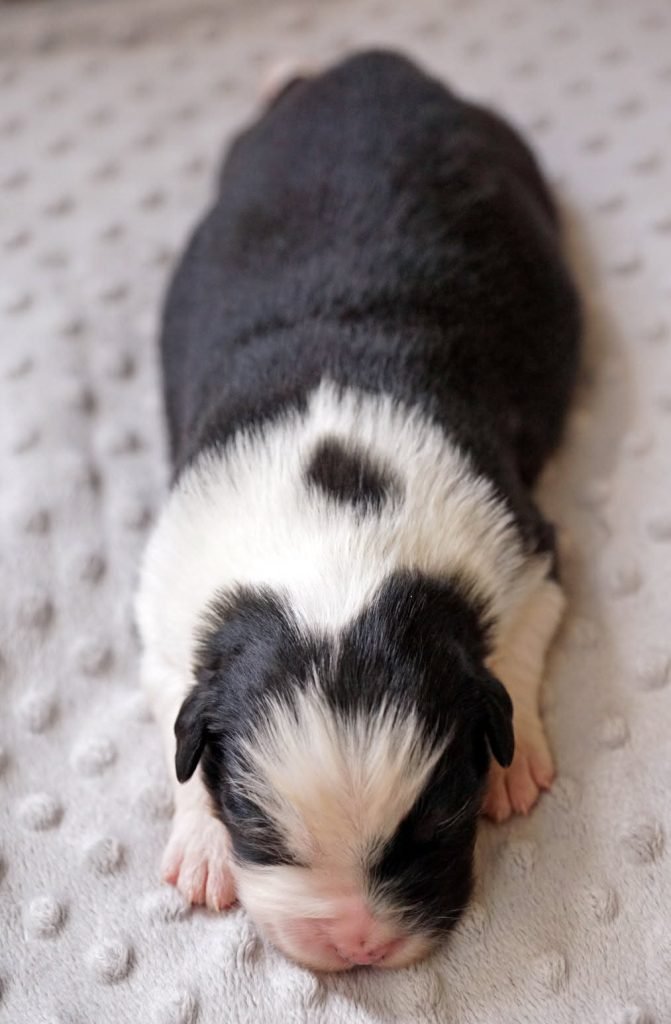
The crate is not the only place to stay
For a short sleep a crate can be excellent. For longer periods a growing puppy is often better off in a safe pen or a puppy-proofed room where he can change position, drink and move about.
Even for an adult dog, a whole working day alone should not be the norm simply because he can physically endure it. The British animal welfare organisation RSPCA recommends not regularly leaving an adult dog alone for more than four hours; a small puppy needs contact and toilet breaks far more often.
If the family schedule does not allow that, the solution has to exist before the puppy comes home: a family member, a trusted person, a dog sitter or another realistic daily plan.
When professional help is needed
If the puppy panics the moment you move towards the door, cannot eat, injures himself, repeatedly urinates from fear, or the time he can spend calmly alone does not lengthen even with very small training steps, consult a behaviourist who works with positive reinforcement methods, and your vet.
Separation anxiety is not disobedience. The sooner it is recognised, the less often a dog has to endure a situation he cannot yet bear.
An independent dog is not one who stopped calling because nobody came. It is a dog who knows from experience: I can rest, and my people come back.
Read next: Socialisation without overload: not how many people petted him, but how he felt