
As a puppy’s arrival approaches, something interesting happens: people become extraordinarily productive in pet shops.
The bowl — done. The bed — done. Toys — seven of them, although the dog does not yet have a single tooth on the toy selection committee. Lead, collar, towel, treat tin, car protector. Then you see another bed, because the first one perhaps looks too firm.
All of this is fun. At last there is something concrete to do.
Objects are the easy part of preparing.
Questions you cannot buy in a shop
Far more important, before the puppy arrives, is to answer the questions you cannot buy in any shop.
Who will get up at night? Who will walk him in the morning when one person is away? Will the dog be allowed on the sofa? What happens when a child wants to play and the puppy is asleep? How many hours will he really have to be alone in a few weeks’ time? What will you do if the first days look nothing like the lovely picture you had in mind?
These conversations are not as photogenic as a new bed, but they make the first weeks a great deal easier.
Because a puppy does not arrive as a blank page. He arrives after the biggest change in his short life.
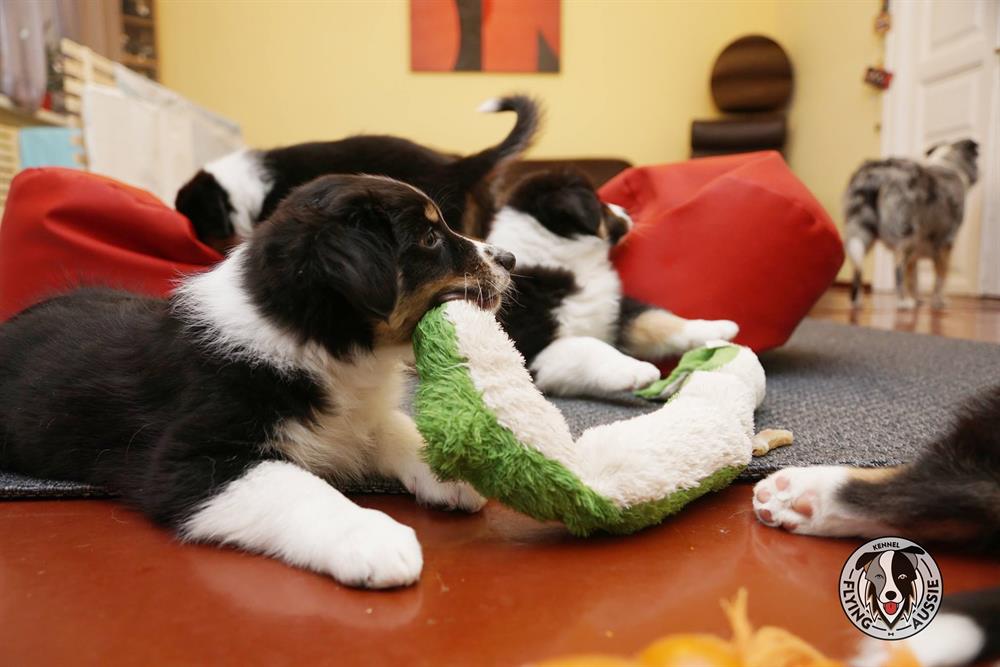
Yesterday there was his mother, his brothers and sisters, a familiar smell and a routine. Today there are new people, new floors, new sounds, a car, different water, a different room and somebody repeating his name very enthusiastically.
So in the first days we do not care how many cues he learns. We care whether the new world is starting to feel predictable and safe.
A closed laundry basket is a training tool
Preparing the house matters, of course. Cables, small objects, poisonous plants, cleaning products, the bin, the stairs — all the things an adult learned to ignore long ago can look to a puppy like a very interesting research project.
The best way to deal with most “bad habits” is not to give the chance to rehearse them from day one. If you do not want the puppy stealing socks every day, a closed laundry basket is a far more effective training tool than saying “no” fifty times a day.
But physical safety is only half the job.
A puppy also needs a place to rest. To rest properly — not to be the main exhibit in a new home.
The first days are very tempting for inviting family, friends and neighbours. After all, everyone wants to see the puppy. Only it matters not at all to him how many people in your life were waiting for him. His nervous system simply needs to process information.
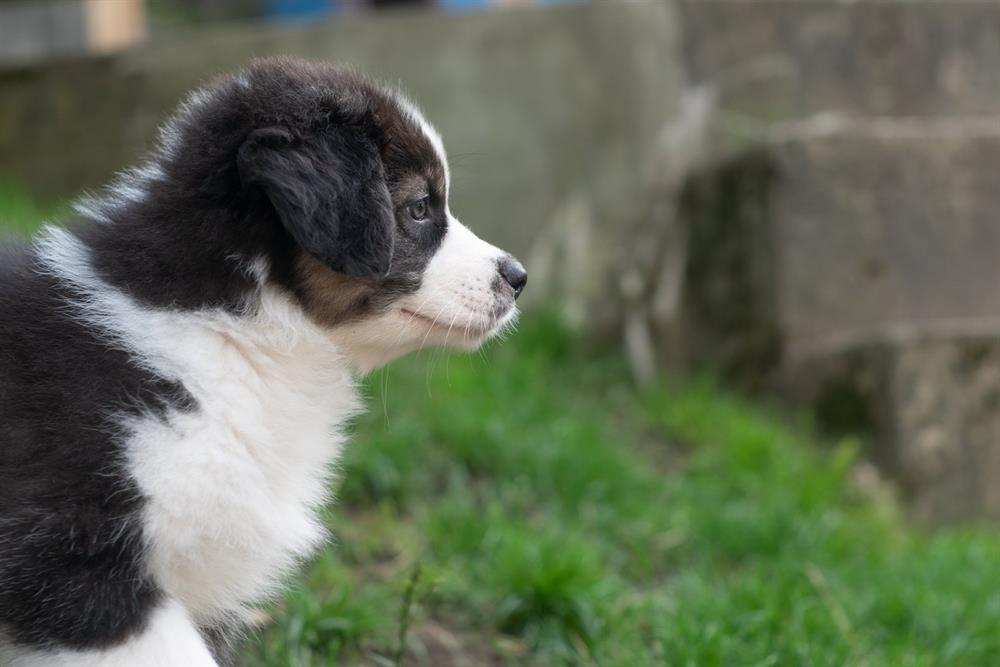
So “socialisation” in the first week should not mean a permanent event. Sometimes the best plan is fairly dull: sleep, food, a short trip outside, a little play, more sleep.
Rules for children come before the puppy
This matters especially in families with children.
To a child a new puppy is Christmas, a birthday and a theme park in one. To a puppy a child can be a loud, fast and very unpredictable animal who for some reason wants to touch him even while he is asleep.
So rules for children should exist before the puppy does: we do not disturb him while he sleeps; we do not take food or toys away; we do not pick the dog up without an adult; we do not run after him if he moves away; adults supervise the interaction.
Not because we expect problems. Because we want to avoid creating them.
The other thing worth planning for is time alone.
If the whole family takes two weeks off, the puppy spends 24 hours a day with people, and then on the first working Monday is suddenly alone for four hours, that is a fairly radical system update for him.
So short, safe separations should appear gradually, even if you do not need to go anywhere in the first days. Not to “toughen him up”, but so that being without you does not become an unexpected catastrophe.
It is also worth knowing in advance who your vet is, where the nearest 24-hour clinic is and whom you will call about behaviour questions. These contacts are far pleasanter to have when you do not need them.
And one more very practical point — do not change everything at once in the first days. If the puppy arrives eating a particular food, there is no need to change it on the first evening because you bought something “even better”. A new home is already a big enough change.
Perfect preparation is impossible anyway.
Your first puppy will do something that was on no list at all. The second will do something entirely different. And that is when a seventh toy will not help — but the ability to watch and adjust the plan will.
So do buy a bowl before the puppy arrives.
But more important still — sit down with the people he will live with and agree what your first weeks will look like.
A puppy does not need a perfectly prepared home.
He needs a family that at least knows what it will do when reality turns out different from the photographs.
Invitation: Choosing a puppy from us, you get more than a going-home bag. Together we discuss your everyday life, that particular puppy's needs, and continued help after it leaves.