
A puddle on the carpet looks to a person like very clear evidence. To a puppy it is merely what happened a few minutes ago, when he could hold on no longer or nobody noticed the signal.
If you come home, point at the puddle and scold, the puppy does not learn “outside yes, indoors no”. He may learn something quite different: relieving myself while a person is watching is unsafe. Then he starts hiding behind the sofa, or waits outside until you look away.
House-training is not built by shaming mistakes. It is built by creating many successful repetitions in the right place.
A good breeder starts earlier
A serious breeder starts teaching cleanliness as early as the third or fourth week of the puppies’ lives. Sleeping, play, food and toilet areas are clearly separated, and the puppies learn not to soil where they sleep.
The new owner continues this work. Ask the breeder what surface the puppy used, at what time of day he usually emptied his bowels, and whether he had already been taken outside. A familiar surface or smell can help him understand the task in the first days.
But even a beautifully prepared eight- or nine-week-old puppy does not yet have an adult dog’s physical control. You cannot say he has almost learned it and only slips up occasionally. The responsibility for creating the opportunity still rests with you.
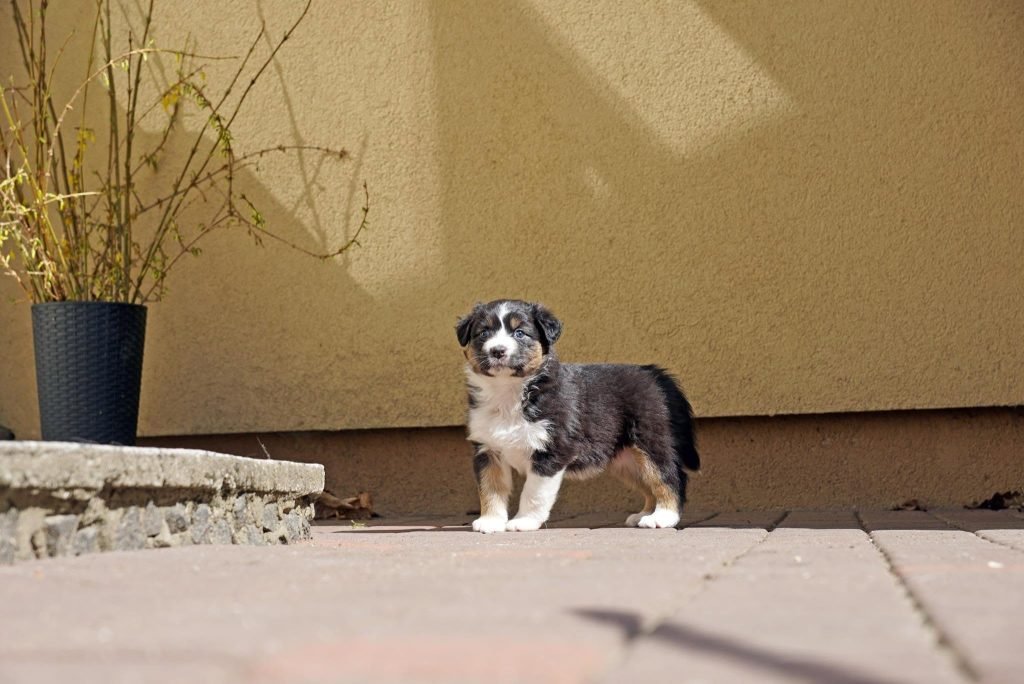
When to take the puppy out
It is worth taking the puppy to the chosen spot:
- right after waking up;
- after eating and after a longer drink;
- after play, training or excitement;
- before sleep and after every nap;
- before being left alone and right after you return;
- whenever you notice sniffing, circling, restless pacing or a sudden break from play.
In the first weeks it is better to offer one opportunity too many than one too few. The intervals depend on more than age. They are changed by sleep, food, activity, weather, excitement and the individual puppy’s development.
One place, one cue, a clear reward
Go out through the same door and to the same small spot. At first the surroundings should be calm and uninteresting enough for the puppy to remember that he needs to go — but not frightening.
Do not repeat the cue ten times. When you see the puppy beginning to go, calmly say your chosen word once. When he finishes — praise and reward at once. Only then can you allow sniffing, play or a short walk.
This order matters. If you go straight home every time the puppy relieves himself, a puppy who wants to stay outside may start holding on, because he learns: I went — the fun ended.
If the puppy did nothing outside
After a few calm minutes go back inside, but do not give him the freedom of the whole house. Keep the puppy beside you on a light lead, in a pen, or return him briefly to the crate if he is already used to it. Try again after ten or fifteen minutes.
This is not a punishment for “not going”. You are simply not letting a puppy with a full bladder slip behind the sofa.
When the puppy succeeds outside, he earns supervised freedom. That way freedom follows success, and you can predict the next need far more accurately.
What to do when you catch a mistake
If you catch the puppy right at the start, interrupt calmly with a neutral sound and carry him quickly to the right place. If he finishes there — praise him.
If you find the puddle later, say nothing to the puppy. Clean it with an enzymatic cleaner that removes the smell, and think about where the gap in the system appeared. Too long an interval? Too much freedom? A missed waking? New food? Boisterous play?
A mistake is information for the owner, not a moral failing by the puppy.
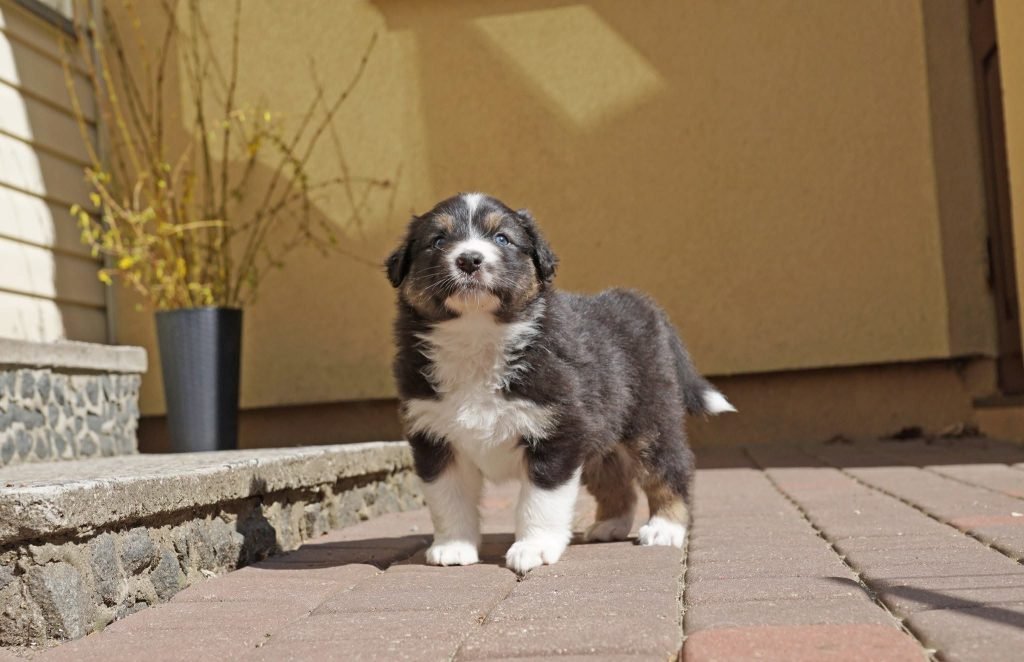
The crate helps you predict, but teaches nothing by itself
A crate used properly helps because most dogs try not to soil where they sleep. A puppy who has just woken can be taken straight outside, creating a very clear sequence.
But a puppy shut in too long eventually has no choice. If he is forced to urinate on his bed, the problem is not his “stubbornness” but too long a confinement, a health issue, severe stress, or earlier experience in an unclean environment.
When you will be away for a long time, it is better to prepare a larger safe area for a small puppy, with sleeping and toilet areas separated, and arrange for someone to come and let him out. A crate will not help a puppy hold on longer than he physically can.
Night-time training
In the first nights keep the crate beside the bed. The last trip outside happens right before sleep, and another one as soon as the puppy wakes. If he starts turning restlessly or whining at night, carry him out calmly to relieve himself.
The night has to stay dull: little light, no play, the same cue and a return to the sleeping place. That way the puppy gets no night-time entertainment, but his body’s need is not ignored.
When you need a vet rather than more training
These signs are not training problems: sudden regression in a dog who had learned, frequent urination in small amounts, pain, excessive thirst, diarrhoea, blood, an unusual smell or incontinence during sleep. Contact your vet.
Successful house-training looks almost boring: you watch, take him out, wait, reward and repeat. That is exactly why it works.
Read next: Crate training without fear: step by step