
A new family usually waits weeks or months for a puppy to arrive. Nobody explained that to the puppy.
That very morning his world smelled of his mother, his littermates and familiar people. By evening he is somewhere else: walking on different floors, hearing unfamiliar sounds and looking at people who very much want to love him. Even a bold, sociable puppy goes through an enormous change on that first day.
So the aim of the first 72 hours is not to show him his whole future life. The aim is to narrow the world enough for him to understand it.
Preparation ends before you set off to collect the puppy
By the time you come home with the puppy you should no longer be wondering where he will sleep and which door he will be taken out of. Prepare one quiet main area, a crate or bed, a pen, a gate, a water bowl and a few safe chews. Move away cables, plants, children’s toys, shoes and anything else you do not want to see in a puppy’s mouth.
Bring his usual food from the breeder, information about feeding times and, if possible, a piece of fabric with a familiar smell. In the first days the change of family is quite enough. There is no need to change the food, the sleeping place and the whole routine at once.
The family also has to agree on words. Which cue will mean a trip to the toilet spot? Will the dog be allowed on the sofa in future? Who gets up at night? Who supervises the children and the puppy together? A rule that depends on which family member happens to be in the room is not a rule to a puppy.
The first hour: less ceremony, more clarity
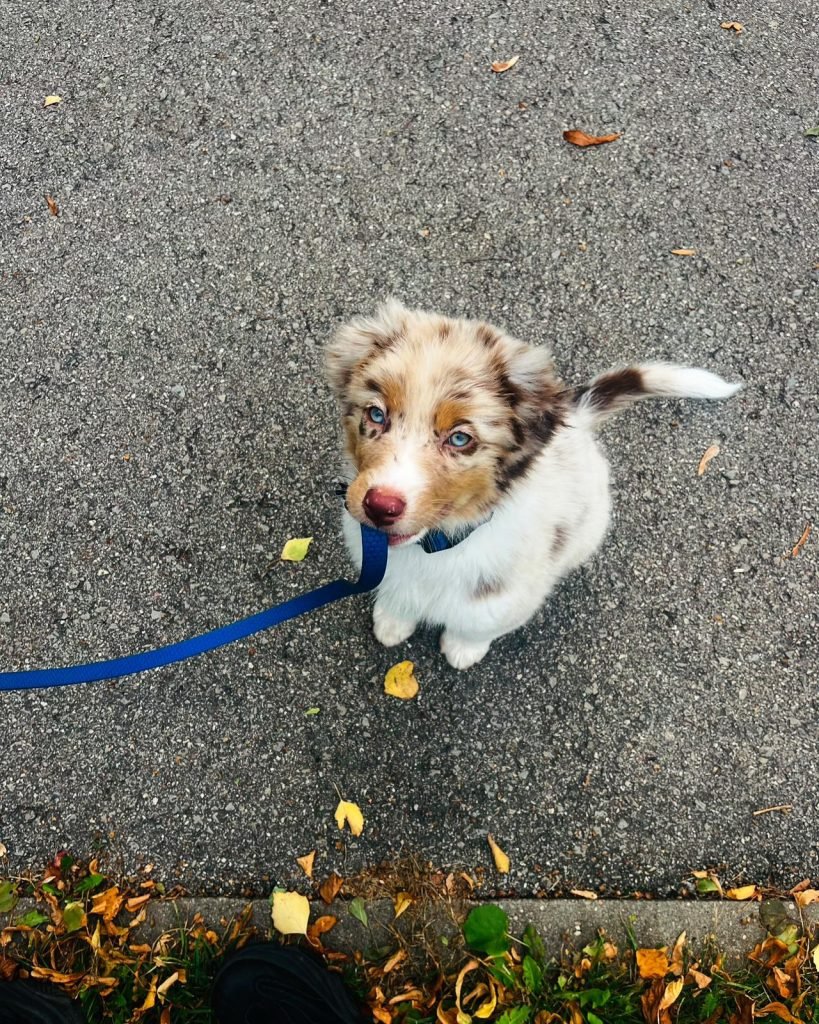
When you get home, first carry or walk the puppy to the chosen toilet spot. Not to the living room, not to the waiting grandparents, and not to be photographed beside the new bed. The journey, the excitement and waking up often mean the puppy needs to relieve himself.
Wait calmly. When the puppy starts to go, say your chosen cue once, for example “busy” or “toilet”. Give the reward and show your delight only once he has finished. Then you can explore the immediate surroundings for a few minutes and go inside.
Indoors, show him not the whole house but the main area. Let him sniff, drink, find his bed and the crate. Do not pass the puppy from hand to hand and do not invite all the neighbours. A bond does not come from as many people as possible touching him in the first hour.
The first evening: observe, do not examine
The puppy may seem unusually calm. Or, on the contrary, he may race about, grab hands and be unable to stop. Both reactions can be linked to tiredness and tension.
Do not rush to decide what his “real character” is. On the first day you are seeing an animal after a huge change, not his final personality.
Offer his usual food, take him out to the toilet spot afterwards, spend a short calm time together and help him fall asleep. There is no need to teach every cue on the first evening. His name, following you and a few successful trips outside are already a great deal.
If there are children in the house, the first meeting should happen on the floor or with the child sitting calmly, and an adult within arm’s reach. The child must not carry, hug, wake or follow the puppy into his crate. From day one the crate and bed must mean a place where nobody touches the dog.
The first night: closeness is not spoiling
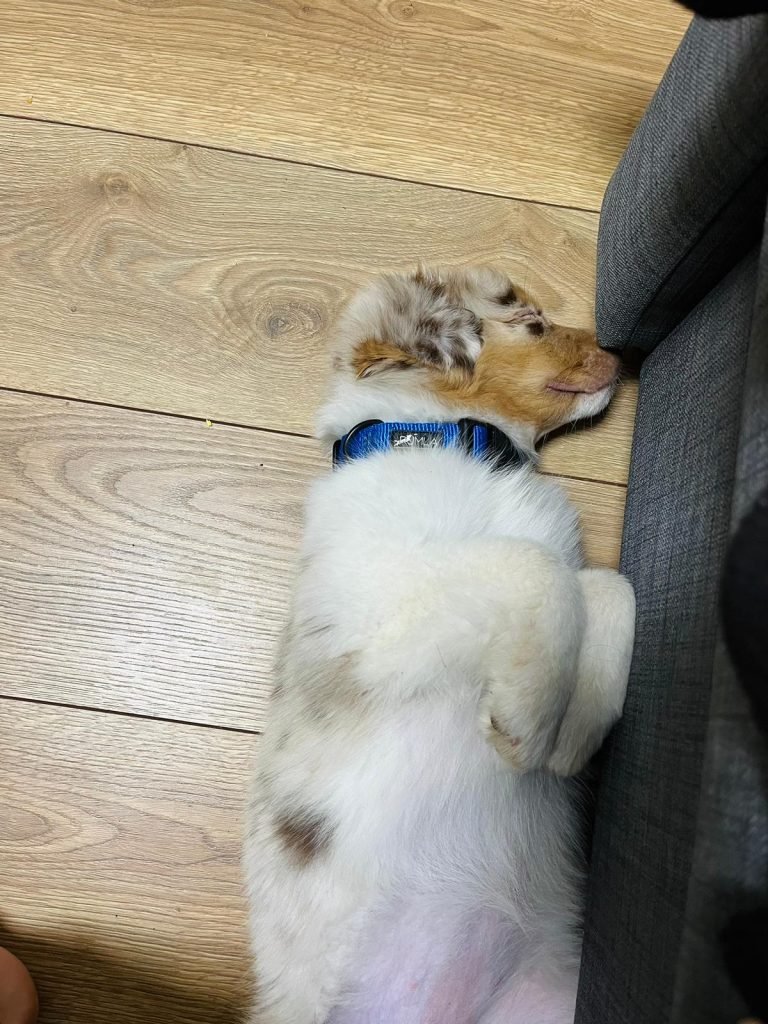
Until now the puppy has never slept alone. Expecting him to spend his first night calmly at the other end of the house, with no preparation, is not teaching independence.
Put the crate or bed beside your own. That way you will hear when the puppy stirs and be able to tell brief complaint from a genuine need to go out or from building panic. The night-time trip must be calm: to the chosen spot, with no games and no tour of the garden, then back to sleep.
If the puppy whimpers briefly and settles again, there is no need to respond to every sound. If the whining grows, the puppy thrashes about, bites the bars, drools heavily or can no longer take food, this is not simple “stubbornness”. The step is too hard for him. Being there and easing the situation does not encourage fear.
Day two: start building a rhythm
Waking, toilet, food, another trip outside, a short game and sleep. This simple sequence helps faster than constant spontaneity.
Write down when the puppy ate, drank, slept and relieved himself. Within a couple of days you will see patterns. Some puppies empty their bowels as soon as they have eaten, others need ten or fifteen minutes. Some go clearly to the door, others merely stop playing for a moment and start sniffing the floor.
You cannot manage what you do not notice. Brief notes in the first week save a great many puddles and a great deal of guesswork.
Start small separation exercises too. While the puppy is chewing in a safe place, step behind the gate and come back after a few seconds. Walk to the door and back. The aim is not to test how long he can bear it, but to show that a brief absence is not an event.
Day three: the world may expand a little
If the puppy is eating, sleeping, engaging willingly and beginning to find his bearings, you can show him one more room, do a very short grooming exercise, take a calm car ride or watch a new environment from a distance.
But three days is not a deadline by which a puppy must have “settled in”. A more sensitive puppy will need more time. Diarrhoea, changes in appetite or more restless sleep can be linked to stress, but persistent or marked symptoms must be assessed by a vet.
If there is another dog in the house, the introduction should happen in a calm, spacious place, with a person supervising both animals. An adult dog’s growl does not necessarily mean aggression — it can be a request for distance. But an adult dog must not be left to “bring up” a puppy without human supervision. The older dog also needs the chance to withdraw and rest.
What is not needed in the first days
There is no need for a marathon of visitors, a dog park, a long walk, a bath purely for the introduction, all the sounds of the city in one outing, or constant entertainment. Socialisation is not a competition in counting impressions.
It is better to measure the success of the first days more simply. Does the puppy find somewhere to rest? Is he starting to eat? Do you already recognise his toilet signals? Does the day contain at least a few calm, predictable cycles?
If so, you are not “doing nothing”. You are laying the foundation for everything you teach later.
Read next: A puppy’s daily rhythm: why rest matters as much as activity