
There is one very strange day in a breeder’s life.
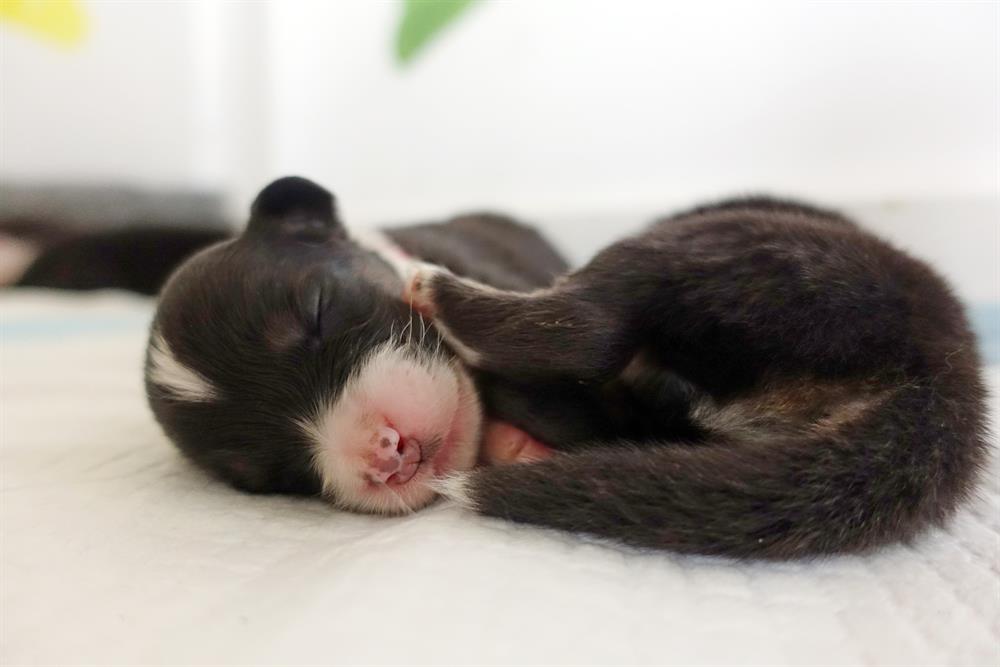
The puppies you have watched for months, from their first breath, start leaving one after another. For the family it is an enormous beginning: photographs, excitement, a new bed, the first car journey home.
For the puppy it is the opposite. That day his familiar world essentially ends. His mother, brothers and sisters, the smells, the people, the house — everything that was taken for granted until now is left behind.
And for the breeder?
In our view this should not be the moment when papers are signed, the door closes and the story ends.
If the aim of responsible breeding were to raise a healthy eight-week-old puppy, the work would indeed end very early. But we are far more interested in how that dog gets on after eight months. After five years. When he grows old.
That is why our bond with families is not an extra service on top of a puppy. It is part of breeding.
Information that comes back at the right time
Before collecting a puppy everyone wants to know absolutely everything. What food to buy? How to teach him to be alone? When to start socialisation? How often to go out? When can he do sport? What to do if he bites?
We could hand people a 300-page manual. There is just one problem: in that first week roughly the same thing is happening in the person’s brain as in the puppy’s. Too much new information.
So something you read before collecting your puppy and calmly thought “understood” about can suddenly take on a completely different meaning six months later. The chapter on adolescence is read far more attentively when your eight-month-old Aussie has just decided, for the first time in his life, not to recognise you.
That is exactly why we value information that comes back at the right time.
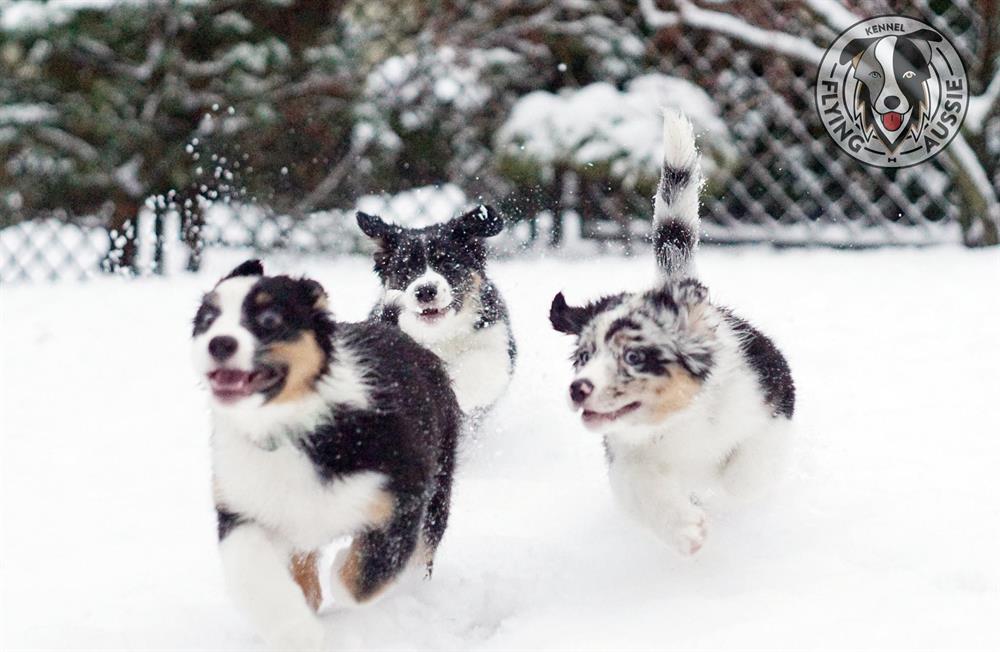
For that we have a manual, information about puppy development, and our own Puppy Calendar, which links information to the dog’s actual age. Not because we want to remind owners of every small detail. But because hearing one of three sentences at the right moment can matter enormously: “Yes, at this age that can be normal.” “This is worth preparing for now.” Or: “Here it is better to speak to your vet or trainer.”
A breeder is not a vet. And not every breeder is a behaviourist. We would even say that a breeder with a categorical answer to absolutely every question is slightly more suspect than one who sometimes says: “I don’t know that, but I know who is worth asking.”
Good support does not make a family dependent
Good support should not make a family dependent on the breeder. Quite the opposite.
A few years on, we want the owner to understand their dog far better than we do. We can provide context. Tell them about the line, the temperament, the brothers and sisters. Share what we saw as he grew. But it is the family who lives with that dog every day.
Another very important part of the bond is the community.
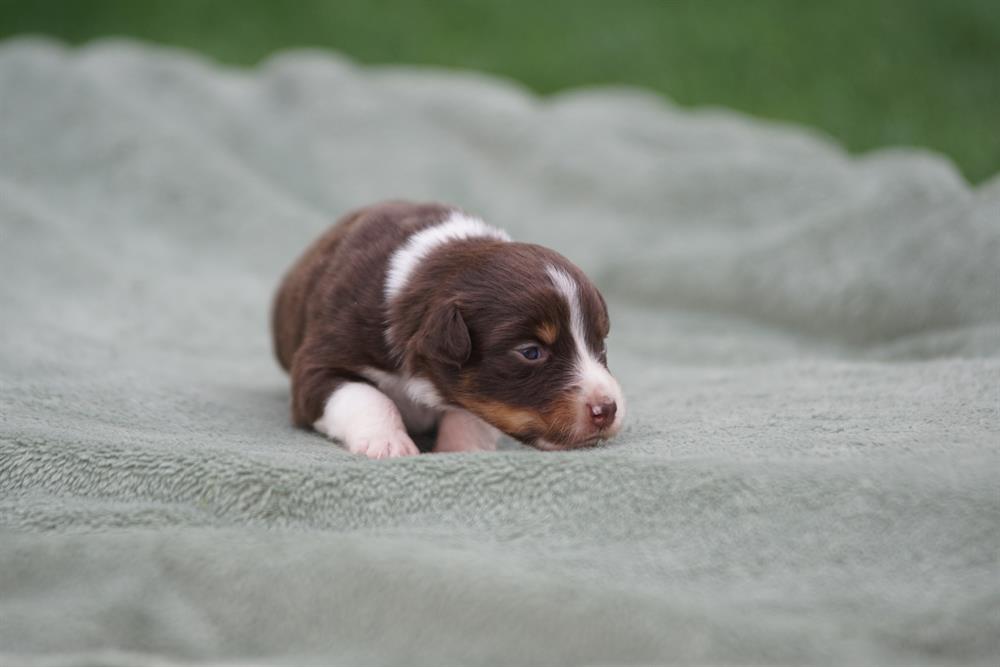
Sometimes no manual can replace a sentence from someone raising your dog’s brother: “Ah. Ours did that too.” Suddenly you realise no unique catastrophe has happened in your home.
What is more, this bond is not merely a service to families. We get a huge amount of information back from it.
How did our dogs grow up? What are their temperaments? What recurs in the lines? What health problems appeared in later life? How do people who actually live with the dogs rate certain traits?
All of this shapes our future breeding decisions.
So for us the real level of a kennel shows in more than photographs of eight-week-old puppies. It shows a year later, when a family writes about a problem. Five years later, when they send an ordinary holiday photograph. And many years later, when the dog is growing old but the bond is still there.
The puppy leaves. The bond should not.
Invitation: If you are looking not only for a puppy but also for a responsible start and a community, tell us what kind of support you expect during the first year and beyond.