
A family brings a puppy home and expects the older dog to be delighted with a new friend. The older dog sniffs, turns away and leaves. The puppy follows, jumps on his head, bites his ears, and people laugh: “He’ll get used to it.”
Perhaps he will. But a friendship should not begin with one dog having no right to walk away.
Across twelve litters we have learned one simple rule: when one dog stops playing, the game is over. Your job is to help the other one understand that.
Prepare before you bring the puppy home
Assess the older dog’s health. Sore joints, poorer hearing or sight and less patience are not “jealousy”. A puppy crashing into him or following constantly can be physically unpleasant.
At home, prepare separate beds, water points and areas that can be divided with a gate. In the first days of introduction, put valuable chews and toys out of reach. Feeding always happens separately.
The older dog must have a place the puppy cannot reach. The puppy must have his own safe space where he can sleep undisturbed by the older dog.
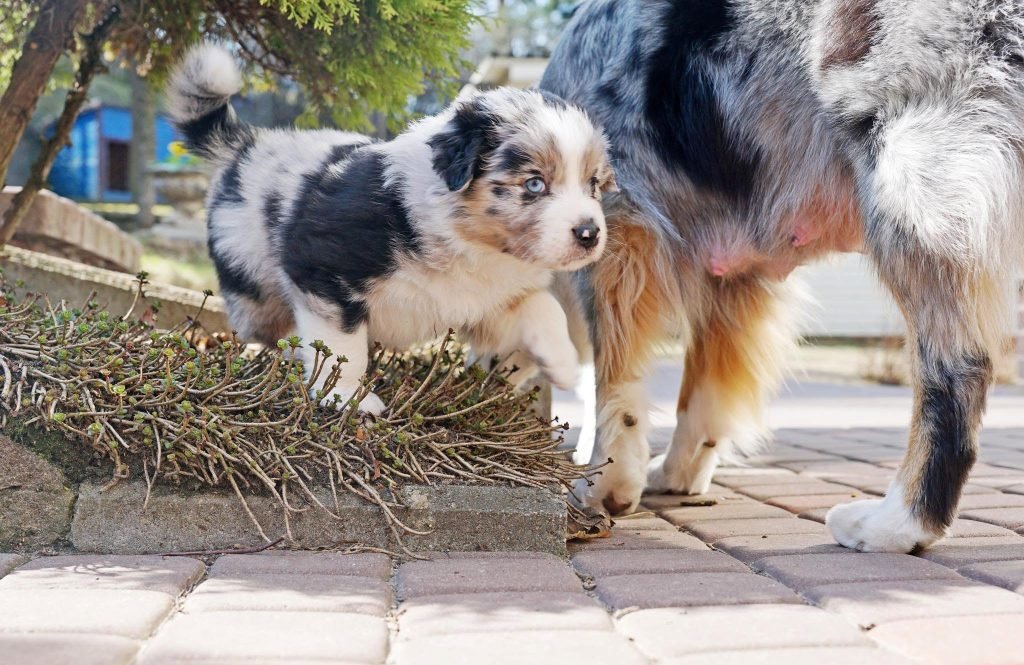
The first meeting should not happen in a narrow corridor
If health and vaccination status allow, arrange the first meeting in a neutral, spacious place. Two people walk in the same direction, keeping their distance at first. The dogs can gather information without a head-on encounter.
Approach in a curve, keep the leads loose. A brief sniff — then move on again. There is no need to hold the dogs muzzle to muzzle until they “become friends”.
If the puppy cannot yet go to public places because of infection risk, choose a clean private garden and a known healthy dog, and agree the specific plan with your vet.
Growling can be information
The older dog is lying down. The puppy jumps on him. The older one turns his head away, moves off, and finally growls. That can be an entirely proportionate request: leave me alone.
Do not scold every growl. But do not let the situation repeat until the older dog has to defend himself more forcefully. Call the puppy away, separate them physically with a gate and offer another activity or sleep.
That way the older dog learns that you hear his boundaries. The puppy learns that walking away and turning aside mean the game is over.
On the other hand, age does not give the right to control the puppy’s every move. If the older dog follows, blocks, guards passageways, prevents access to people or attacks the puppy when he is not even interacting with him, you need to step in and seek help.
What good play looks like
The bodies stay fairly loose, there are pauses, and the roles swap. Sometimes one chases, then the other. A larger dog may hold back or lie down. After a pause both sides come back willingly.
If one dog constantly runs, hides, tucks his tail and tries to climb on you while the other does not let him withdraw, that is not mutual play simply because there is no blood.
Separate them briefly and see what the dog under pressure chooses. If he comes back himself — you can carry on. If he goes to drink, sniff or lie down elsewhere, the pause should stay.
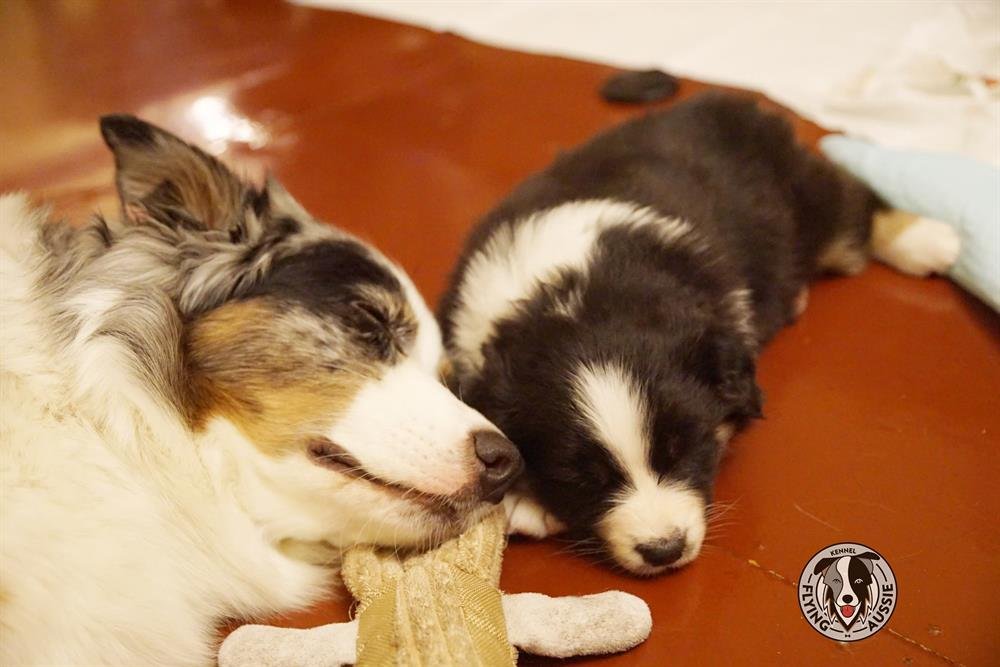
Protect more than peace — protect rest as well
A puppy needs a lot of sleep, while an older dog needs his usual routine kept. Being together constantly can exhaust them both.
Plan separate walks and separate time with each dog. The older dog should not lose all the activities that matter to him simply because a puppy has arrived. The puppy also has to learn to orient towards people, rather than getting all his security and play from another dog.
Do not let them sleep together in one crate. Do not leave them unsupervised until you have seen stable, mutually respectful interaction in a variety of situations over a long period. Even then, food and especially valuable chews can stay separate.
They do not have to become best friends
Some pairs will sleep curled up together. Others will share a home peacefully but choose different beds. Both outcomes can be good.
Your task is not to make the dogs love each other. It is to create a home where both dogs’ “yes” and “no” mean something.
Read next: Dogs and children: a friendship the adult is always responsible for