
“Our dog would never do anything to children.”
This sentence is usually said about a beloved, familiar family dog. That is exactly why it is dangerous. The British animal welfare organisation RSPCA points out that children are more often harmed by a familiar family dog than by a strange one. Not because family dogs are bad. Because a great deal of time is spent with them, people relax, and nobody notices the dog asking for space more than once.
A good bond between dog and child is not built by hoping the two will “sort it out themselves”. The adult builds it.
Supervision means more than being in the same room
Looking at your phone on the sofa while a small child crawls towards the dog’s bowl is not active supervision. The adult has to see the dog’s body, the child’s actions, and be able to step in at once.
If you cannot, separate them with a gate, a pen or a door. Separation is not a failure. It is one of the basic tools of safe living.
Even the calmest dog should not be left alone with a small child. A child’s movements are unpredictable, and a dog cannot say in words that he is in pain, tired or wants to sleep.
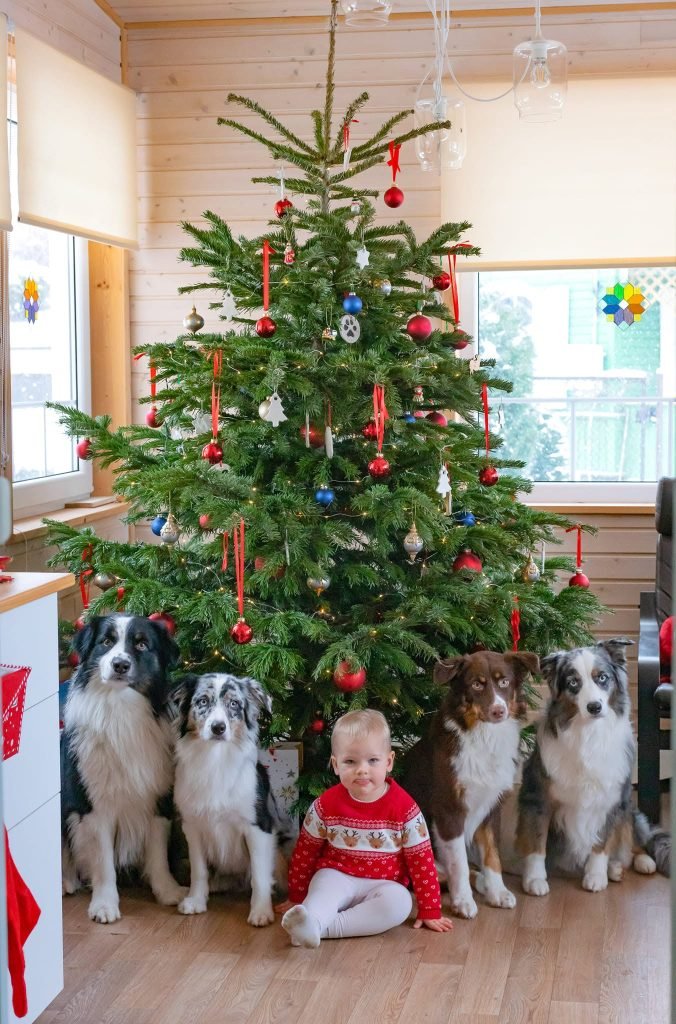
The dog’s resting place is off limits to children
A crate, a bed or a separate corner must be a place the child does not follow the dog into. There the dog is not touched, hugged or invited to play.
The rule applies even when the dog looks alert. If he has chosen to withdraw, his choice must count. Otherwise the dog learns that quiet retreat does not work, so next time a growl may be needed.
You can explain it simply to a child: the dog’s bed is like his room. We may invite him out, but we do not follow him in.
People and dogs show affection differently
Children hug, kiss, lie down beside a dog and bring their face close. For many dogs that closeness is unpleasant, even if they tolerate it.
Teach children to stroke the side or chest for a few seconds and then stop. If the dog moves closer — you can carry on. If he turns away or leaves — the interaction is over. We do not touch a dog who is sleeping, eating, ill, injured or holding a chew.
A photograph of a child lying on a dog is not proof of a close bond. Sometimes it only shows a very patient dog in a situation he did not choose.
The Australian Shepherd and a running child
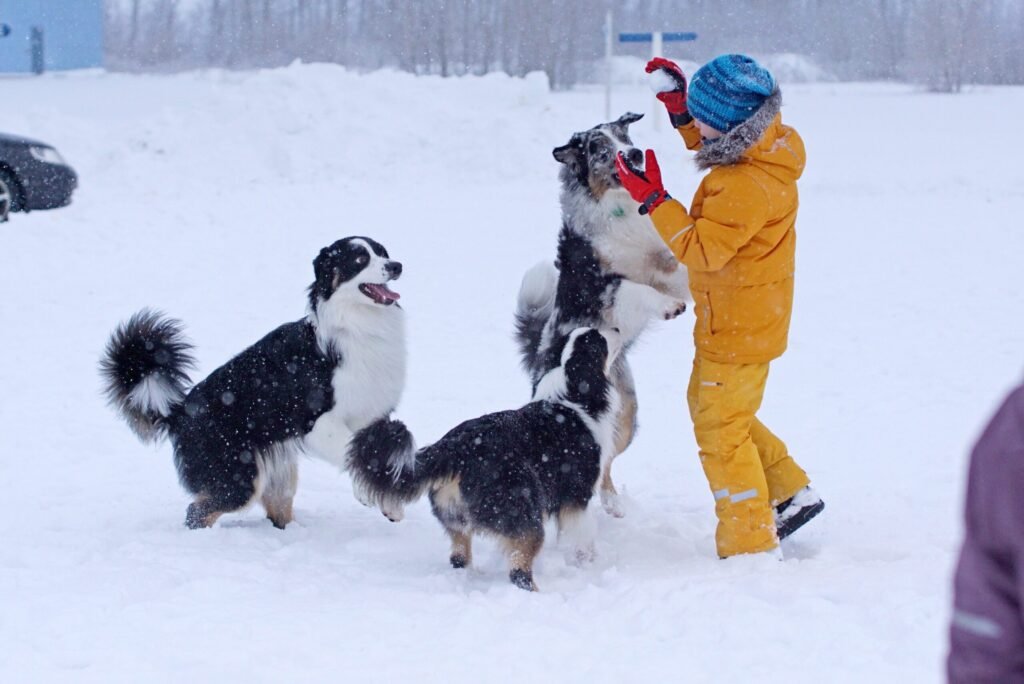
Fast movement, shrieking and sudden changes of direction can trigger an Australian Shepherd’s urge to chase, block or grab clothing. This does not mean the dog is aggressive or “herding the child, so it’s fine”.
The adult manages the distance. At first the dog watches the moving child from behind a gate or on a lead and is rewarded for keeping all four paws on the ground, turning to look at you and staying calm. The child is taught not to run from a dog who is already chasing them, and to call an adult.
When the excitement rises, the game ends early rather than waiting for the puppy to “run it off” by biting trouser legs.
A child must not discipline the dog
Older leadership-theory literature sometimes suggests that a child should stand firm, block the dog, hold the lead or display higher status. That shifts the adult’s responsibility onto the person who is physically and emotionally most vulnerable.
A child can, together with an adult, throw a treat, give the dog a simple cue or play a safe game. But they must not take objects away, punish growling, push the dog or resolve a conflict.
If the dog does not listen to a child, the answer is not to demand that the child be “stronger”. The answer is for the adult to manage the situation and train the dog at a safe distance.
Preparing for a baby starts before the birth
Before the baby arrives, teach the dog to rest on a separate mat, to stay calmly behind a gate and to walk beside a pram. Introduce the future furniture, smells and sounds gradually. If walk times or the sleeping place are going to change, make those changes in advance so they are not linked only to the baby.
When you bring the baby home, do not carry them straight to the dog’s nose. Let the dog watch from a safe distance, reward calm behaviour and keep as much of his usual routine as you can.
Signals that must never be dismissed
Turning away, withdrawing, lip licking, freezing, “whale eye”, growling, guarding a toy or a place — these are signals that call for more distance and a fresh look at the situation. Do not make a dog endure the same situation until he supposedly “gets used to it”.
If the dog has already snapped, growls when a child approaches or cannot settle because of their movement, separate them and consult a qualified specialist. No internet advice replaces an individual risk assessment.
A friendship between a dog and a child can be one of the finest experiences for them both. It begins not with unconditional trust in the dog, but with the adult’s unconditional responsibility.
Read next: Fear should be neither pitied nor broken