
In the evening the puppy starts biting trouser legs, racing in circles, jumping on the furniture and no longer hearing his name. The family draws the logical conclusion: too much energy, so more play is needed.
After another half hour of play the puppy only gets faster and sharper.
Very often this is neither a “bad character” nor a lack of exercise. It is an overtired puppy who cannot yet switch the world off by himself.
A puppy’s day runs in cycles
An adult can be tired and still decide to go to bed. A tired puppy often behaves as though he needs one more activity. His self-regulation is only forming, so you have to help him move from arousal to rest in good time.
A simple cycle looks like this: waking, toilet, food or a short activity, another chance to relieve himself, and sleep. Not every cycle needs a walk, a training session and a new socialisation task. Sometimes the activity is a few minutes of sniffing in the garden. Sometimes it is quiet chewing beside you.
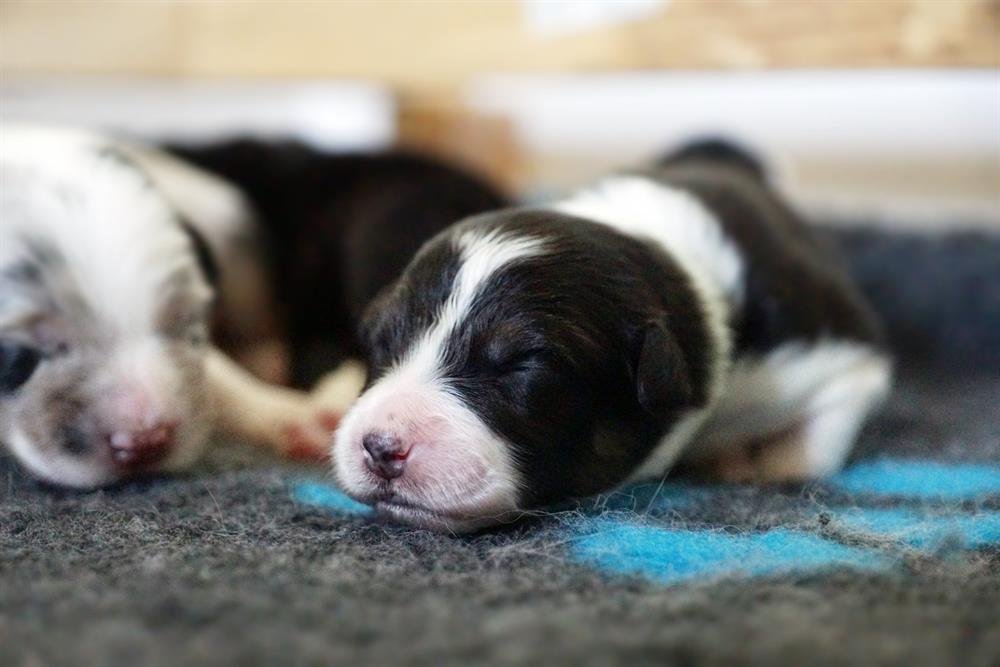
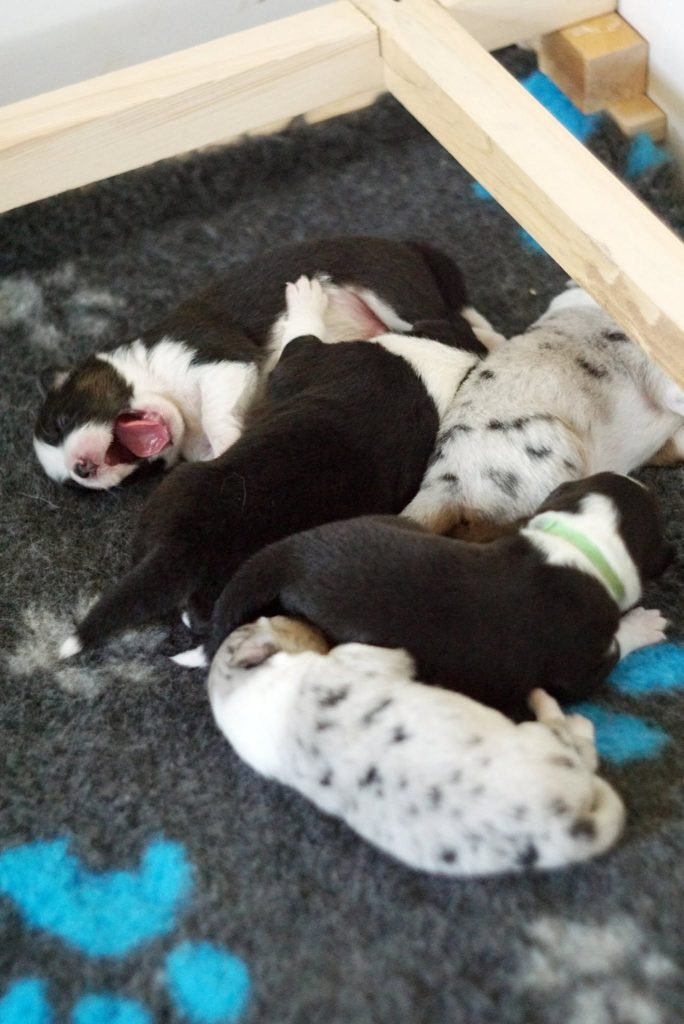
Young puppies sleep for most of the day. Sleep is not lost training time. During it the nervous system processes what the puppy has experienced and the body grows. A puppy who is constantly woken or occupied with new activity can look very “industrious” while controlling himself less and less well.
A guideline day is not a military schedule
A schedule should help you notice a rhythm, not make the family a hostage to the clock. A guideline day for an eight-week-old puppy might look roughly like this: at seven, toilet and breakfast, then a short game and sleep; at ten, toilet, a few training repetitions and rest again; at midday, toilet, lunch and a longer sleep. In the evening the same cycle shortens, and the last trip outside happens just before the night.
Watch the individual puppy. If after twenty minutes of play he starts grabbing hands, there is no need to build up to thirty the next day. It is better to finish earlier, while he can still accept help.
The resting place has to be genuinely quiet
A bed in the middle of the kitchen can look cosy, because the puppy is with the family. But if people keep walking past, food drops, children play and another dog moves about, sleeping there is difficult.
A crate, a pen or a separate quiet corner helps reduce the number of choices. A dimmed space, a partly covered crate, a familiar piece of fabric and a safe chew can become a clear signal that it is time to rest.
The family’s behaviour matters too. There is no need to stroke a sleeping puppy simply because he is sweet. You can explain it simply to children: when the dog is asleep in his own place, we do not call him and we do not touch him. This is not only a rule about rest — the future safety of dog and children depends on it too.
An active breed does not mean endless activity
The Australian Shepherd was created to notice movement, respond to his surroundings and work alongside a person. So he will often gladly accept another game, another task and another outing. That does not mean he needs all of them.
If we solve every bout of excitement with a ball, a run or an intense training session, we may raise not a calm, contented dog but a very enduring athlete who finds it ever harder to stop.
Mental work can be exhausting too. Ten minutes in a new place where the puppy sniffs, watches people and hears traffic sometimes takes more out of him than a long walk somewhere familiar. After such an experience it is worth planning not a second adventure but sleep.
Calmness can be noticed and reinforced
People notice a puppy very quickly when he barks, steals or bites. A puppy lying quietly often becomes invisible — after all, he is not causing trouble.
That is exactly the moment to walk over quietly and place a treat between his paws. Or to praise him calmly, without winding him up. The puppy begins to understand that attention comes not only when he makes a noise or otherwise demands activity.
You can also teach a clear cue for “place”, but at first the state of calm matters more than the ability to lie there a long time on hearing the cue. A soft mat, a safe chew and short rewards for staying voluntarily build a habit to which a word can be added later.
When biting means “that’s enough for me”
An overtired puppy often:
- grabs clothes or hands harder than usual;
- races in sudden circles and skids on the turns;
- can no longer do even a simple task he used to find easy;
- barks at people, children or another dog;
- keeps switching activities but settles at none of them;
- lies down and jumps up again a few seconds later.
At such a moment more training rarely improves things. Reduce the stimulation, take the puppy out to relieve himself, offer water and help him move calmly into rest. If needed, stay beside the crate or pen until his breathing slows.
A good routine is not measured in tiredness
A puppy does not have to “crash” from activity every evening. It matters far more that he falls asleep more easily, can learn after waking, bites less from tiredness, that his toilet timing becomes more predictable, and that he settles faster after new experiences.
A rhythm is not a boring life. It is the safe background that makes adventures manageable.
Read next: House-training without punishment: a system that works