
Picture a fairly typical situation. You arrive at the breeder’s to meet the litter. Several puppies are running about in front of you: one comes straight over, climbs onto your feet and tries to catch a shoelace, another approaches a little more carefully, a third is busy playing with his brother, and yet another apparently sees no reason whatsoever to get up from his nap for you.
And then one puppy runs up first, sits down beside you and looks straight into your eyes. This is often where the thought is born: “That’s it. He chose me.”
It sounds lovely. In reality you have learned very little — that at that particular moment this puppy was the first to come over to you.
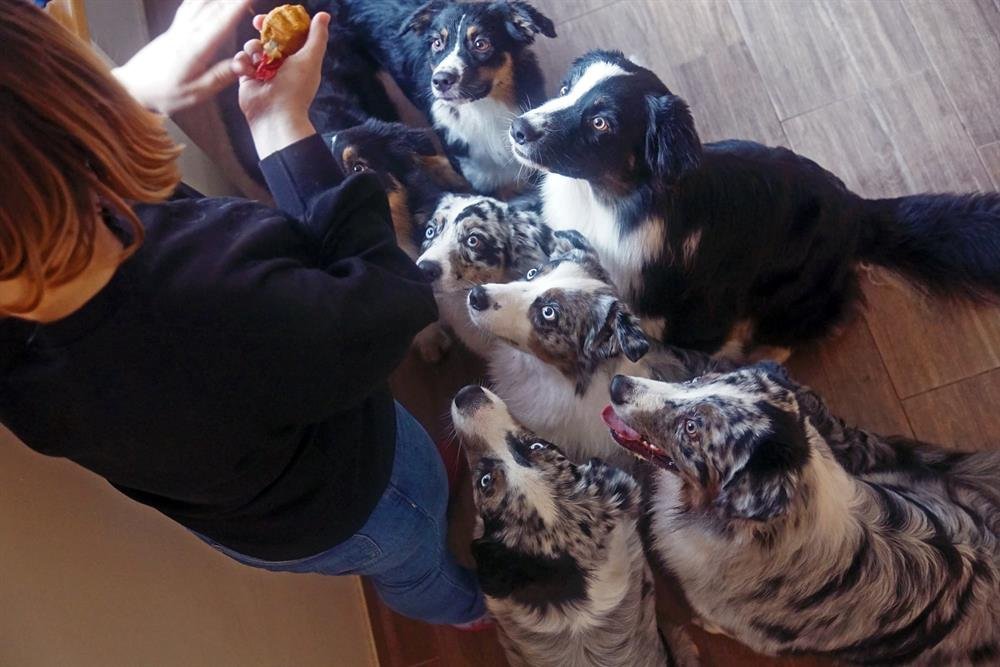
Perhaps he really is very people-oriented. Perhaps he is especially curious and bold. Or perhaps he is simply first to approach everything — people, boxes, new toys and every other potentially interesting object. Meanwhile the other puppy, who looked at you today from two metres away, may have been first to charge about half an hour ago and is now simply tired.
And this is where one of the biggest problems in choosing a puppy begins: from a few minutes of behaviour a person very quickly tries to draw conclusions about the dog’s entire future character.
Advice that sounds logical but guarantees nothing
The internet is full of such advice. Choose the one who runs up first. Choose the boldest. If there are children in the family — take the calmest. If you want to do sport — choose the most active. Do not take the one who keeps his distance. And the most romantic version of all: “you will simply feel which one is yours”.
The problem is not that there is no truth in this advice. The problem is that each of them tries to squeeze a complex animal into one very simple behaviour.
A puppy who is first to run up to a stranger may be beautifully socialised and very confident. But the same behaviour can also indicate high impulsivity. A puppy who at first stays a little further back is not necessarily timid. He may simply be watching the situation before deciding what to do about it.
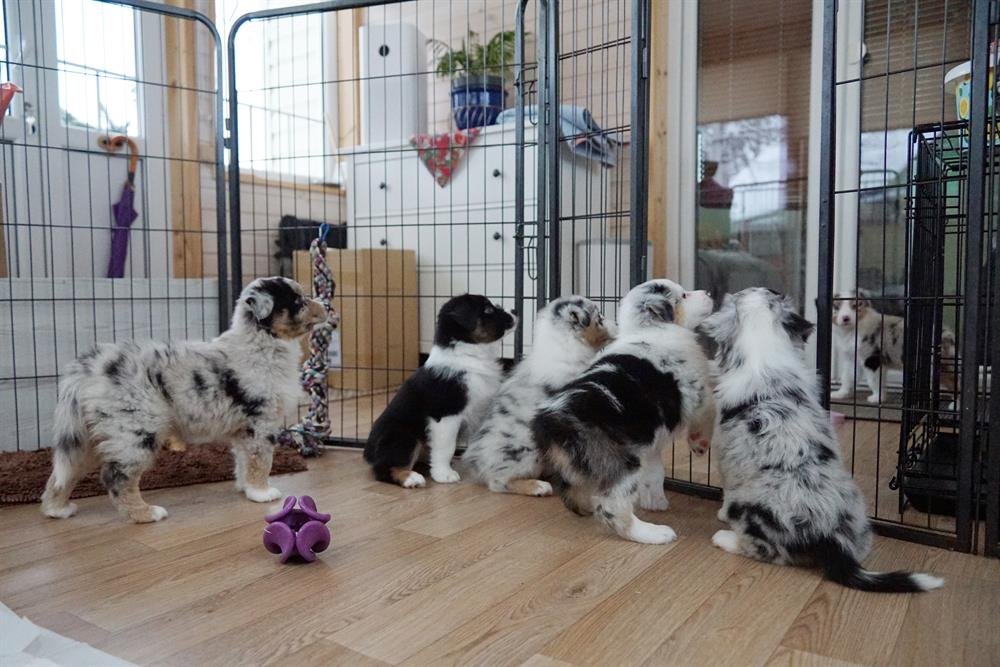
This matters especially when assessing dogs of a particular breed. For example, the Australian Shepherd is not a breed in which every individual must instantly want to befriend every new person. A certain reserve and assessment of a situation is not in itself a problem in this breed. So to someone without much experience of Aussies a more cautious puppy can look “less friendly”, while a person who knows the breed well will see something quite different in the same behaviour.
What does a “calm puppy” actually mean?
The wish to choose the “calmest” puppy is just as misleading. We hear it particularly often from families with children: we want a calm, gentle dog, so we choose the one who runs about least.
But what does “calm” actually mean?
Perhaps the puppy really does have a fairly stable, easily self-regulating temperament. Or perhaps he is simply tired. Perhaps his response in a new situation is to freeze and watch. Perhaps he is more sensitive to his surroundings and needs more time to settle.
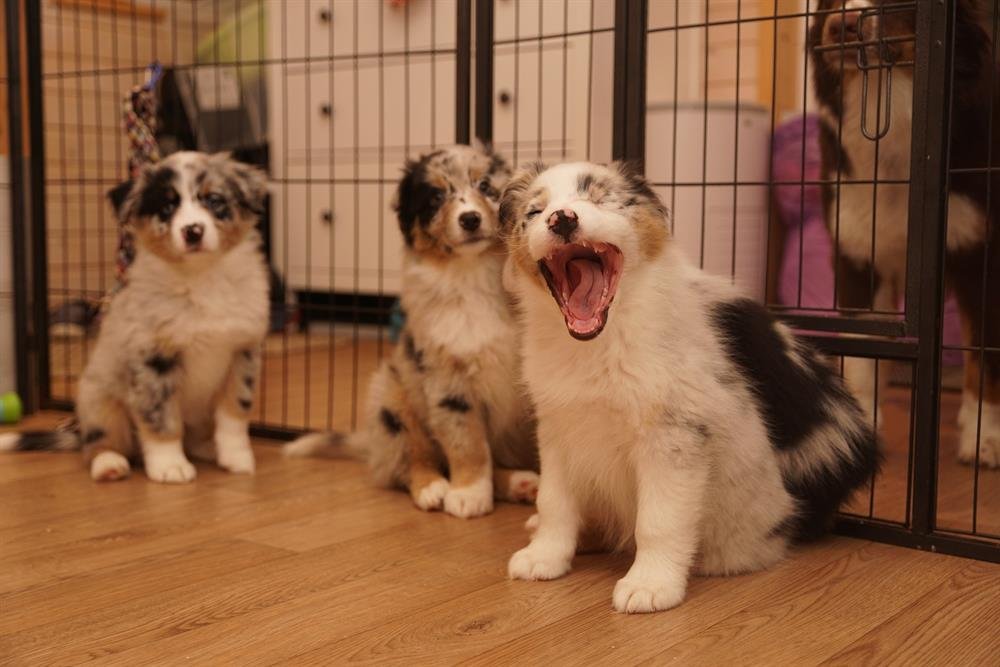
To someone who sees the litter for half an hour, all these options can look almost identical. To a breeder who watches those same puppies every day in many different situations, the difference is usually a great deal clearer.
“I want a sports dog, so give me the most active one”
The same applies to the opposite extreme.
High activity alone does not make a good sporting partner. Often it matters far more how the puppy cooperates with a person, how readily he accepts help, how he solves a problem, what he does when something fails at the first attempt, and how quickly he can settle after strong excitement.
One puppy may be a real little engine and at the same time very independent. Another is a little less wild but follows people constantly and works with them very willingly. A third watches for a few seconds before acting and only then has a go.
Which of them is best? The answer depends on more than the puppy. It depends on the person who will raise that puppy.
Colour, eyes and other criteria that please the eye
And here another very human criterion appears — looks.
“We want that particular blue merle.”
“We would like blue eyes.”
“I liked this one best in the photos.”
And that is entirely understandable. We all see with our eyes first, and puppies have a considerable talent for switching off the rational part of the human brain.
Only colour tells you nothing about how that dog will react to frustration, noise, conflict, a new environment or pressure. It tells you nothing about whether your future dog will need people intensely or be fairly independent, whether he will recover easily from an unpleasant situation, or whether his energy level will fit your daily life.
If your favourite colour happens to match the temperament that suits you best — wonderful. But it is better for decisions to be made in that order, not the other way round.
“I will simply feel which one is mine”
It is even harder to argue with this feeling. And truthfully, there is no need to argue with it entirely. A person can very quickly warm to one particular puppy, and sometimes that really is the same dog who later becomes a wonderful family member.
Only liking a dog and being compatible are not quite the same.
Someone looking for a calm family dog often falls hardest for the boldest, jolliest and most intense puppy in the litter. He is first everywhere, interested in everything, climbing onto laps, stealing gloves and making a wonderful first impression.
Six months later the same person sometimes starts looking for the answer to where the OFF switch on this dog might be.
And the breeder has most likely watched that “engine” since it was tiny.
A temperament test is not a crystal ball either
There is another side to choosing puppies. When people hear about temperament testing, the opposite expectation sometimes appears: now we will surely be able to measure the puppy precisely and find out what he will be like in five years.
Sadly, that is not the case.
An early assessment of a puppy’s temperament cannot reliably predict the whole personality of the future adult dog. The dog will keep developing, will meet countless new situations, and socialisation, environment, training and the person will matter enormously.
So a temperament test is better treated not as a prediction, but as one more source of information.
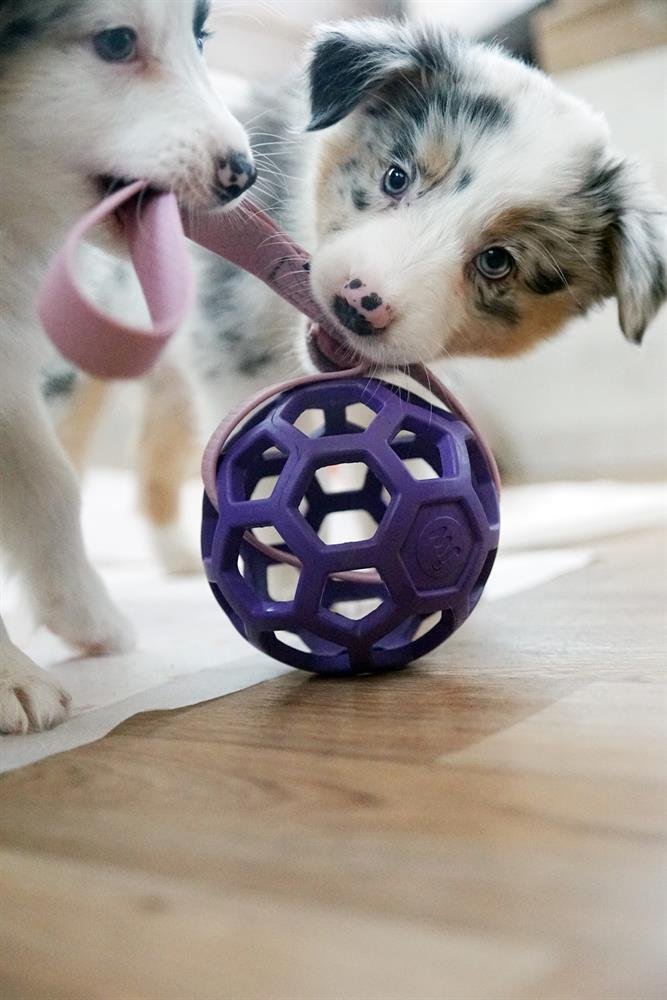
If all the puppies in a litter are given similar situations, you can compare how they respond. One goes straight over to explore a new object, another watches for a while before approaching. One asks a person for help almost immediately when he meets an obstacle, another persists on his own. One returns to what he was doing within moments of an unexpected sound, another needs longer to recover.
None of these reactions makes a puppy “good” or “bad” in itself. They simply help us understand better what this dog is like right now.
At best a temperament assessment adds to what the breeder has already seen over several weeks. Sometimes the test simply confirms the overall picture. Sometimes it shows a nuance that was not so easy to spot in daily life.
And it is the whole of these different layers of information that starts to have real value.
So who should choose the puppy?
Here the answer becomes a little less romantic, but a good deal more practical.
A puppy is best matched when the people making the decision have far more information than can be gathered in a single visit.
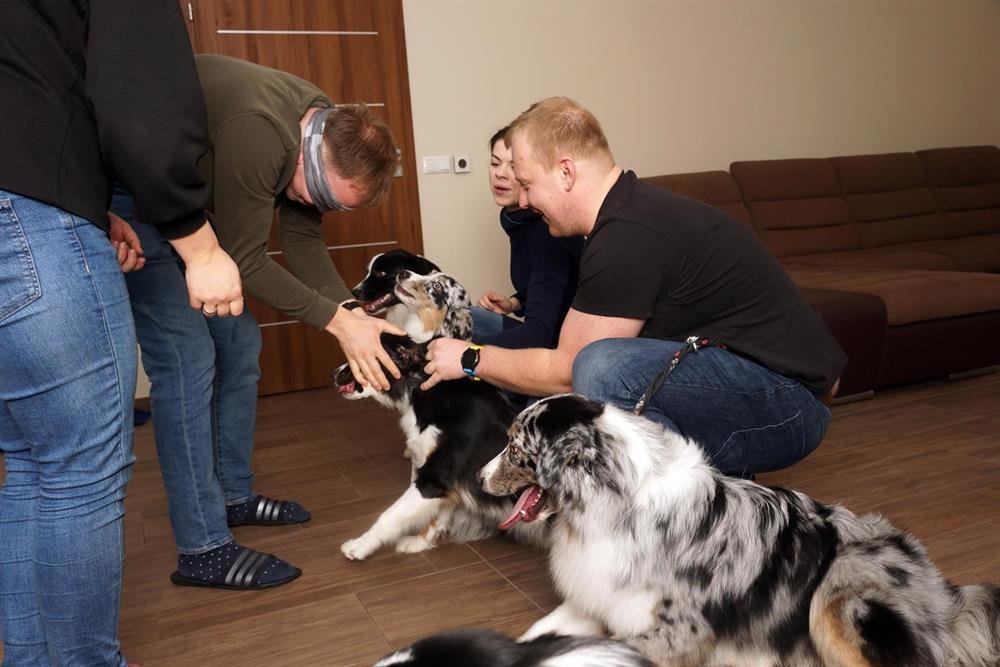
The first person here is usually the breeder. Not because breeders have some mystical power to “see a dog’s soul”, but because he has watched the puppies since birth.
Over several weeks hundreds of small situations accumulate that a future owner simply has no chance to see. Who goes first to explore a new space? Who ignites quickly in a conflict? Who backs down easily? Who looks for a person when faced with a problem? Who recovers quickly after something unpleasant, and who carries the experience longer?
What is more, a good breeder knows more than the puppies themselves. They know the mother, the father, and often earlier litters and related dogs. That allows them to see the wider context: which traits recur in the lines and what they mean for the breed.
So there is great value not in a breeder who says “choose whichever is prettiest”, but in one who can say: “I don’t think this puppy will be the best fit for you.”
A specialist — but does he know the breed?
More information can be gathered with the help of a specialist. But one detail matters here too: the words “dog trainer” do not in themselves mean that someone perfectly understands every breed’s temperament.
A good trainer who has seen many different dogs over their career can certainly notice things a future owner will not. Their opinion can be very valuable. Even so, when choosing a puppy of a particular breed, it also matters how well the specialist knows that breed, or at least similar types of dog.
An Australian Shepherd’s reserve, sensitivity to surroundings, wish to control movement or strong interest in what is going on around him have to be judged in an Australian Shepherd context. Someone who has worked with the breed for many years may interpret certain behaviour quite differently from a specialist whose experience is largely with dogs of another temperament.
So if a trainer or behaviourist helps you assess a puppy, it is worth asking not only “how many years have you been training dogs?”, but also “how many dogs of this breed have you actually seen and worked with?”
There is no best puppy in a litter. There is the one that suits you
And then comes the last, no less important part of the equation — the future owner.
Because there is no single “best puppy in the litter”.
There is a puppy who fits one person’s life better or worse than another’s.
A very active, persistent and intense dog can be one person’s dream partner. For another he is a daily source of exhaustion. A more sensitive dog who takes longer over decisions can be a fascinating partner for an experienced person, while someone raising their first dog may find him difficult.
One future owner wants to walk in the woods at weekends, train rally obedience, agility or frisbee and constantly teach their dog something. Another wants a good family companion who will manage a long walk, can come along on holiday and will lie quietly beside them in the evening.
Both can make excellent owners. They simply do not necessarily need the same puppy.
So a good breeder sometimes says what a future owner does not much want to hear: “I would not recommend this puppy for you.” Sometimes they suggest a completely different puppy from the one you liked best in the photographs. And sometimes they may say something even less welcome: “In this litter I do not see a puppy I could recommend to you with an easy mind.”
And paradoxically, that is often one of the best signs about the breeder.
If the main aim is to sell puppies as quickly as possible, it is far simpler to let people choose by colour, by position in the queue, or on the principle of “whoever ran up is yours”.
If what matters most is how that dog will live in one, five or ten years, sometimes you have to disagree.
The question worth asking instead of all the others
In the end the question should not be “which puppy chose me?” and not even “which one do I like best?”.
A far more useful question is: “Which of these puppies could best live my life?”
Sometimes the answer really will be the same puppy who ran up to you first.
Sometimes it is the one that simply watched for a few seconds at first.
Sometimes it is a puppy whose colour was not even on your wish list.
And sometimes it is the one the breeder recommends instead of your chosen favourite.
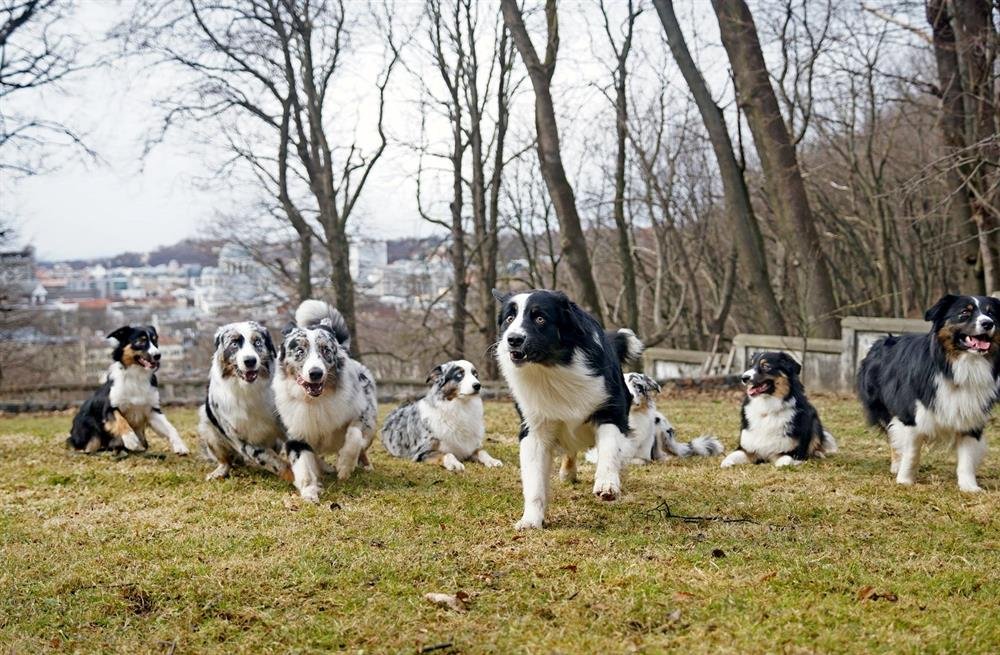
At Skraidančios Ausytės this is exactly why we try to learn as much as possible about future owners’ lives before making a final decision, and why we also carry out an additional temperament assessment of the puppies with a specialist. Not because we believe a seven-week-old puppy can be precisely “measured” and his whole life predicted.
We simply want as much information and as little guesswork as possible.
Because a person is not choosing a puppy for a half-hour visit. They are choosing a dog for their life.
And the best result is probably not that first moment when you pick a puppy up and think “this one is mine”.
The best result comes years later, when you look at that same dog and can calmly say:
“Yes. This one really was ours.”
Invitation: If you are considering an Australian Shepherd, start with a conversation, not a colour. Fill in the questionnaire - it helps us understand your daily life and tell you which puppy would suit it best. And if you want to see what such an assessment looks like in practice, take a look at descriptions of the “Happy” litter puppies.